


Direct Answer
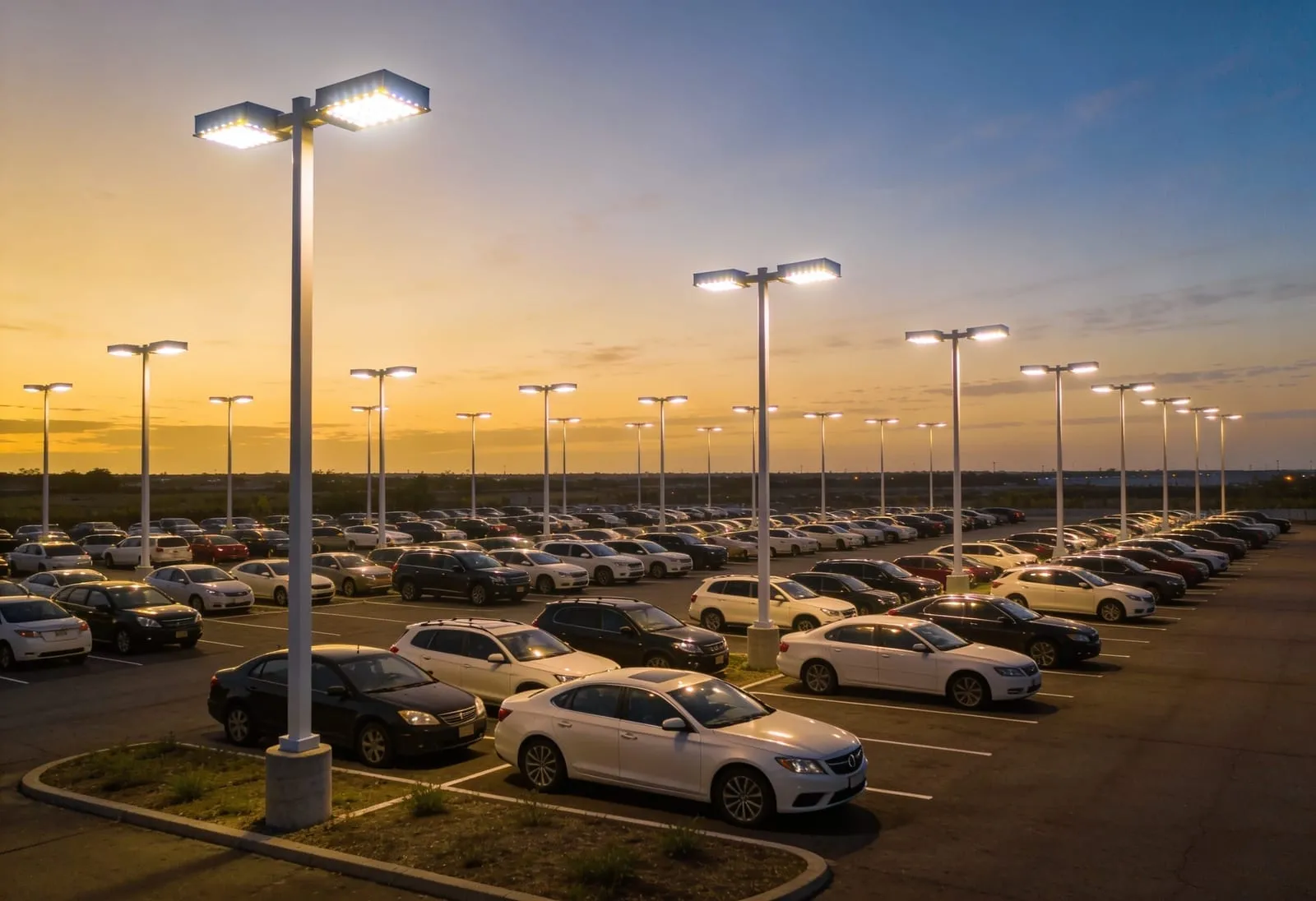
Commercial LED lighting installation covers parking lot lighting, gas station canopy upgrades, and building facade illumination for retail and commercial properties. Midwest Signs provides LED lighting installation in Indianapolis and across Indiana, partnering with national sign companies and facilities management firms to deliver compliant exterior lighting solutions. Commercial LED lighting installation for parking lots, gas station canopies, and building facades in Indianapolis requires photometric planning, utility coordination, and compliance with illumination standards. Our team responds to service partner requests within 24-48 hours.
What Makes Commercial LED Lighting Installation Different from Retrofit Projects?
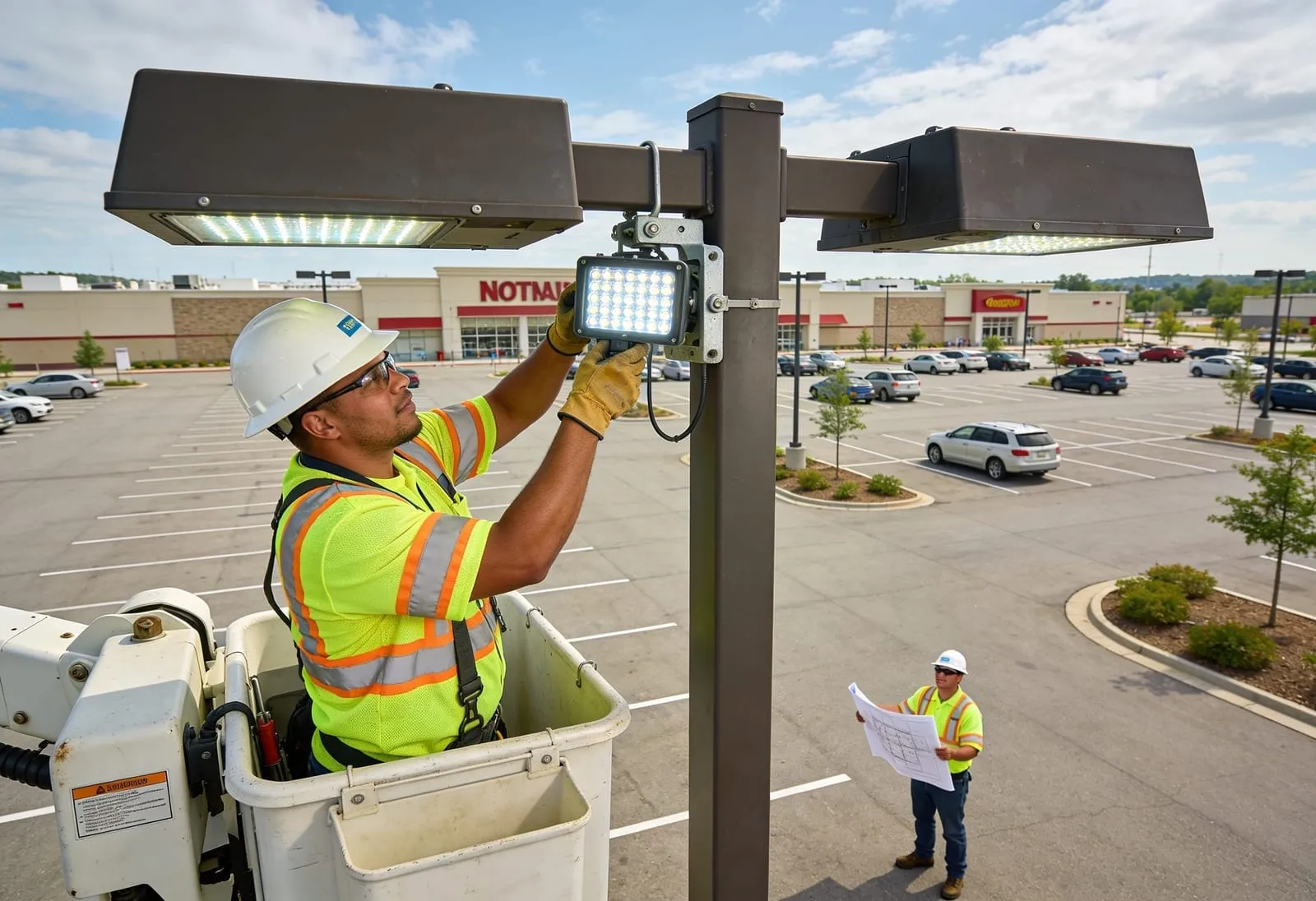
Commercial LED lighting installation for parking lots, gas station canopies, and building facades requires photometric planning, utility coordination, and compliance with illumination standards that vary by municipality and property type. A lighting retrofit might just swap old HID fixtures for LED equivalents on existing poles. But a complete installation involves infrastructure decisions that affect long-term performance and compliance.
Photometric Planning and Light Level Requirements
A photometric plan is an engineering document that maps proposed light levels, uniformity ratios, and compliance with local illumination standards. You can’t just space fixtures by guessing. Indianapolis commercial lighting projects need specific footcandle levels at property lines to avoid light trespass violations, and many suburban municipalities require lower spillover limits than the city itself.
We’ve seen projects in Fishers where the photometric plan looked great until the utility required a different transformer location. That changed pole spacing by eight feet and forced a complete redesign. This is why project surveys and site assessments happen before any commercial lighting installation and service work begins.
Utility Coordination and Power Considerations
Retrofits usually work with existing electrical service. New installations often need:
- Utility coordination for service upgrades or new meter bases
- Trenching and conduit runs to reach pole locations
- Load calculations to determine if existing panels can handle additional circuits
- Coordination with sign permits Indianapolis requirements when lighting integrates with signage
Gas station canopy lighting hits different compliance requirements than parking lot lighting design projects. Canopies need vapor-rated fixtures and explosion-proof junction boxes that add complexity and cost beyond simple LED retrofits.
Parking Lot LED Lighting: Fixture Selection, Pole Mounting, and Energy Performance
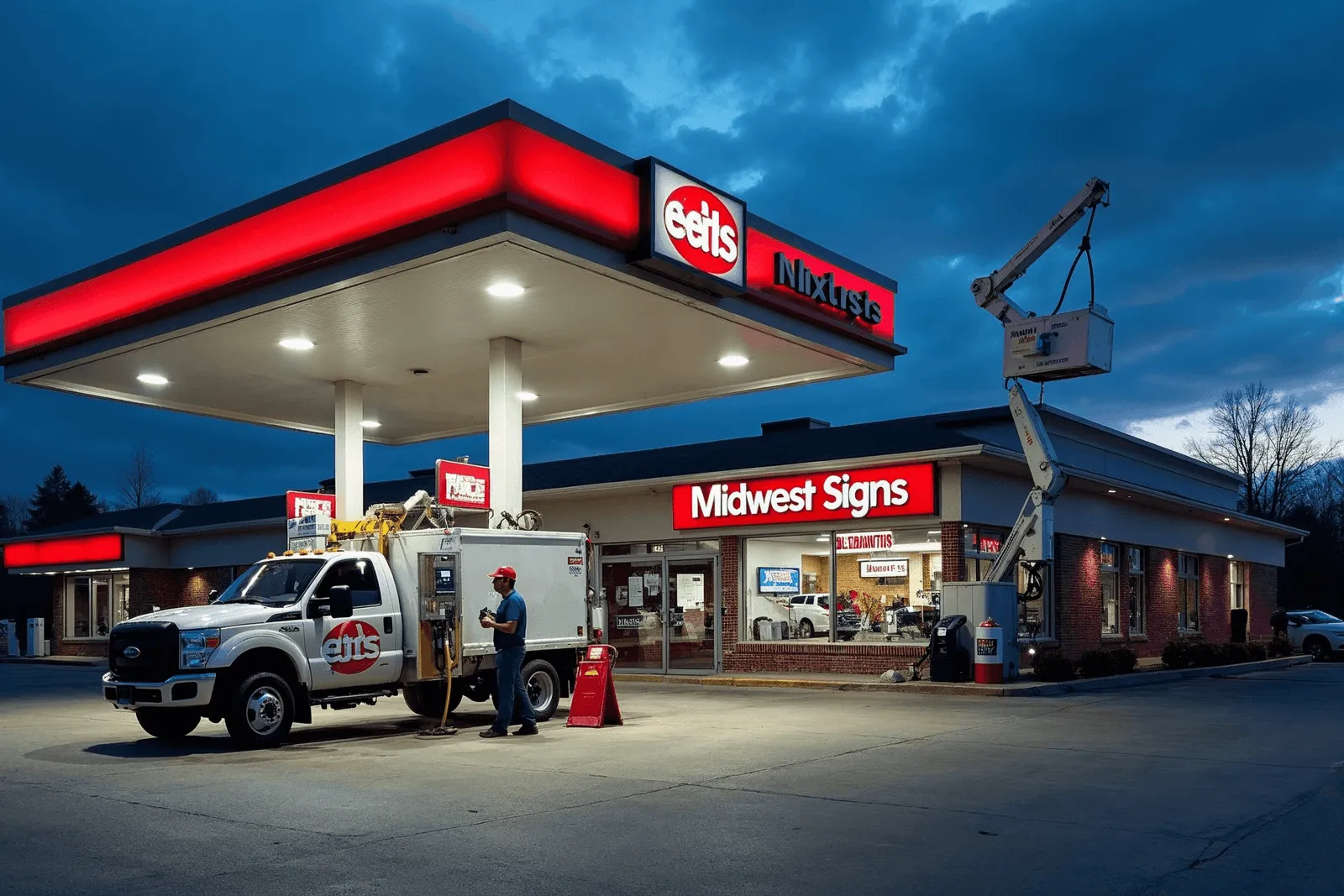
Parking lot LED fixtures in 2026 deliver 130-160 lumens per watt compared to 60-80 lumens per watt from metal halide systems they replace, cutting energy consumption by 50-70% while improving light quality. Color temperature (Kelvin rating) is the measure of light color appearance that determines visibility and safety perception in commercial parking lighting applications.
Lumens Per Watt and Energy Savings
Every LED retrofit project we coordinate for national partners starts with photometric analysis. The lumens-per-watt performance directly determines your client’s utility bill reduction and rebate eligibility. DLC-listed fixtures qualify for utility rebates across Indiana and neighboring states—often covering 15-30% of project costs.
Here’s what matters: LED parking lot lights reduce maintenance cycles from quarterly lamp replacement to 5-7 year intervals. That’s fewer truck rolls, reduced labor coordination, and lower ongoing costs for facilities teams managing multi-location portfolios.
Color Temperature and Light Quality
Most commercial parking applications use 4000K-5000K fixtures. The 4000K range provides warmer light for retail settings. The 5000K range delivers crisper visibility for gas stations and convenience stores. We’ve installed both throughout the Indianapolis commercial district based on client brand standards and security requirements.
And dark sky compliance is increasingly required by municipal codes. Full cutoff fixtures eliminate upward light spill while maintaining ground-level illumination uniformity.
Fixture Mounting and Pole Considerations
The most common mistake we see? Under-specifying fixture output for existing pole heights. A 20-foot pole requires different lumen output than a 30-foot pole to achieve the same footcandle levels. Your photometric plan should account for pole spacing, mounting height, and required uniformity ratios before any LED lighting installation begins.
| Technology | Lumens/Watt | Lifespan | Maintenance Cycle | Energy Cost |
|---|---|---|---|---|
| LED (2026) | 130-160 | 100,000+ hours | 5-7 years | Baseline |
| Metal Halide | 60-80 | 15,000 hours | Quarterly | 50-70% higher |
| High Pressure Sodium | 80-100 | 24,000 hours | Annual | 40-60% higher |
Midwest Signs coordinates parking lot lighting service for national partners throughout parking lot lighting Indiana locations and surrounding states. We handle photometric planning, permits, and installation logistics.
Gas Station Canopy LED Installation: Vapor-Rated Fixtures and Compliance Requirements
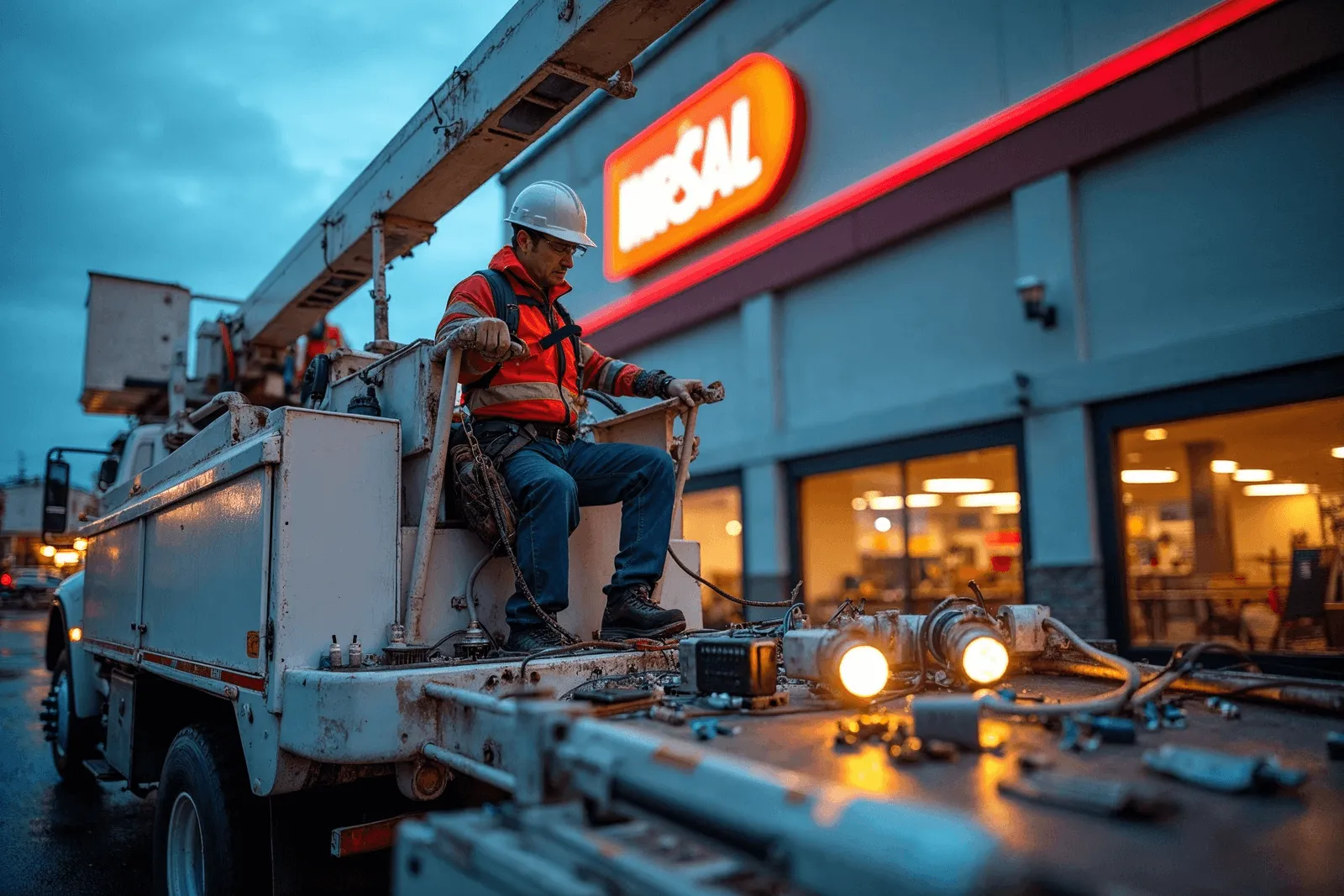
Gas station canopy lighting demands more than standard commercial fixtures. These petroleum facility environments require specialized equipment that can handle fuel vapors, weather exposure, and strict fire safety codes. We’ve completed canopy LED lighting installations across the Indianapolis area where one wrong specification could fail inspection—and we’ve seen project managers learn that lesson the hard way.
An IP rating (Ingress Protection) is a standardized measure of how well a fixture resists dust and moisture intrusion that determines whether equipment can survive wet locations. “Gas station canopy LED installations require specialized fixtures rated for wet locations with IP65 or higher ingress protection, plus consideration for fuel vapor environments and local fire marshal requirements.” That IP65 minimum protects against pressurized water jets from all directions, which you’ll encounter during canopy washing and storms.
Fixture Specifications for Petroleum Environments
Vapor-rated fixtures specifically address the challenges of fuel dispenser areas. Your project needs fixtures that meet these requirements:
- IP65 or IP67 ingress protection for complete weather sealing
- Class I Division 2 vapor rating for areas near fuel dispensers
- Impact-resistant polycarbonate lenses rated IK08 or higher
- Uniformity ratios meeting 10:1 maximum-to-minimum standards
- DLC Premium listing for utility rebate qualification
- Mounting heights calculated for uniform light distribution
We recently retrofitted a six-pump canopy in the Northwest Indianapolis retail corridor where the existing metal halide fixtures were pulling 400 watts each. The new vapor-rated LED fixtures dropped consumption to 150 watts while improving uniformity from 18:1 to 8:1.
Fire Marshal and Code Compliance
Local fire marshals scrutinize petroleum facility lighting during inspections. Your installation team needs to coordinate fixture placement with dispenser locations, verify proper conduit sealing methods, and document compliance with NFPA 30A requirements. Most utility providers offer substantial rebates for DLC-listed canopy fixtures—we’ve secured incentives covering 30-40% of material costs on recent projects.
Building Facade and Architectural LED Lighting for Commercial Properties

Building facade LED lighting installations balance architectural accent, brand visibility, and energy efficiency while complying with dark sky ordinances and local electrical codes. Retail centers, hospitality properties, and mixed-use developments across the Indianapolis commercial district rely on facade lighting to enhance curb appeal after sunset. Your lighting installation needs to coordinate with signage, integrate with building controls, and deliver the right color quality for architectural materials.
Color Rendering and Fixture Selection
Color rendering index matters more for building exterior lighting than most project managers realize. A CRI below 70 makes brick facades look muddy and painted surfaces appear flat. We specify fixtures with CRI ratings of 80 or higher for architectural applications where material texture and color accuracy drive the design intent.
RGB and color-changing systems give you flexibility for seasonal branding or event lighting. Hotels and entertainment venues use these programmable systems to shift color palettes for holidays or corporate events. But here’s the thing—white light still handles most commercial accent lighting applications. Static color temperatures between 3000K and 4000K provide warmth without the maintenance complexity of color-changing controllers.
Mounting Methods and Light Distribution
Surface-mount fixtures work for most facade projects where conduit runs remain visible. Recessed options fit cleaner building designs but require coordination during construction or major renovations. Grazing applications—fixtures mounted close to the wall surface—emphasize texture on stone, brick, or textured concrete.
Dark sky compliance limits upward light spill in many jurisdictions. We integrate photocells and astronomical timers that automatically adjust operation based on sunset times. Your facade LED lighting installation should coordinate with sign illumination schedules so both systems operate on synchronized timing, reducing energy waste and simplifying building management protocols.
Working with Regional Service Partners for Multi-Location LED Installations

National sign companies partnering with regional providers gain local expertise without the overhead of maintaining crews across multiple states. Midwest Signs coordinates LED lighting installations across Indiana, Illinois, Ohio, and Kentucky for national sign companies managing multi-location rollouts, handling permits, utility notifications, and 24-48 hour response times.
Honestly, most national partners don’t have the bandwidth to manage utility notifications and permit applications in 200+ municipalities. That’s where we step in as an extension of your team. Our crew based on East 30th Street in Indianapolis responds to lighting service calls throughout the four-state region, from canopy retrofits at truck stops along I-70 to complete parking lot conversions for retail chains.
Regional Coverage and Response Times
We handle regional rollout coordination for multi-location lighting projects where your clients need consistent quality across state lines. Based on our experience serving national partners, LED lighting installation timelines for commercial properties range from single-day retrofits for small canopies to 3-5 day projects for complete parking lot conversions. We maintain paperless documentation so project managers receive installation photos and completion certificates within 48 hours.
Permit and Utility Coordination
Different municipalities require different permit approaches. Some jurisdictions need photometric plans before approval. Others want utility company coordination letters. We navigate those requirements so your team doesn’t need local relationships in every county. National partners benefit from working with regional service providers who handle permitting, utility coordination, and multi-state project logistics as an extension of their team.
Need a regional service partner for multi-location LED lighting projects? Midwest Signs provides 24-48 hour response times and handles all permitting across Indiana, Illinois, Ohio, and Kentucky.
Partner with Midwest Signs for Your Commercial LED Lighting Projects

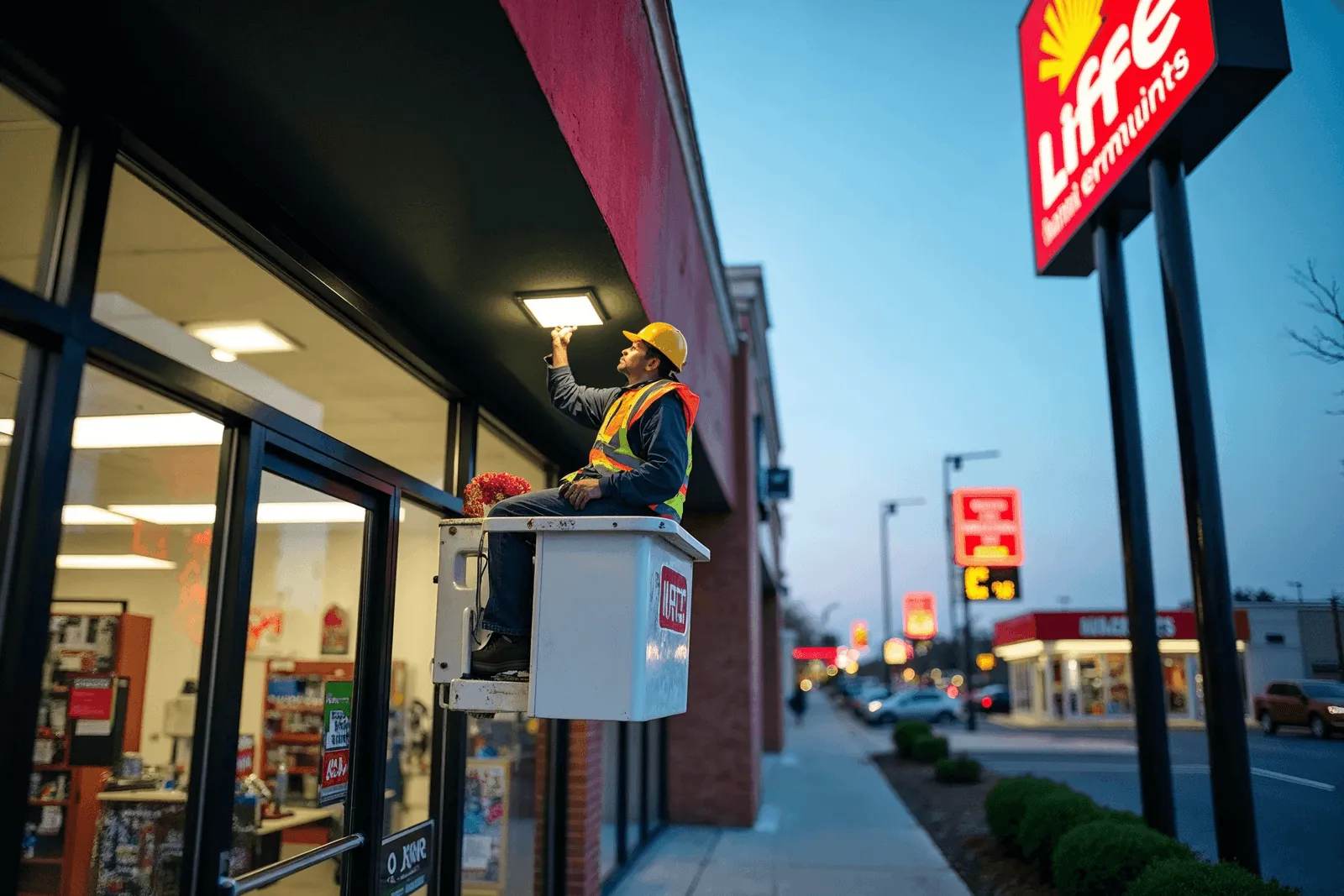
Since 1988, we’ve served as a regional service partner for national sign companies needing reliable commercial lighting installation Indianapolis teams they can count on. Our crews cover Indiana, Illinois, Ohio, and Kentucky with the fleet and specialized equipment your projects demand—bucket trucks, lifts, and vapor-rated fixtures for petroleum applications.
When you partner with us for LED lighting installation, you’re getting more than technical expertise. You’re getting 24-48 hour response times, electronic documentation that keeps your project managers in the loop, and technicians who understand photometric compliance across multiple jurisdictions. We handle utility coordination, permit acquisition, and installation as an extension of your team—not just another subcontractor on the roster.
Midwest Signs serves as a regional service partner for national sign companies needing reliable LED lighting installation across the Indiana-Illinois-Ohio-Kentucky region. That commitment has made us a preferred provider for commercial lighting service projects from gas station canopies to multi-building retail developments.
Partner with Midwest Signs for your commercial LED lighting installations. Call (317) 800-6500 or request a project survey today at our Indianapolis facility: 8560 E. 30th St., Indianapolis.
Frequently Asked Questions About Commercial LED Lighting Installation
How long does commercial LED lighting installation take for a parking lot?
LED lighting installation timelines vary by project scope. A simple retrofit replacing fixtures on existing poles typically takes 1-2 days for parking lots under 50 spaces. Complete installations requiring pole replacement, electrical upgrades, or photometric adjustments can take 3-5 days. Weather, permit processing, and utility coordination affect scheduling. We’ve completed parking lot projects across Indianapolis in as little as 24 hours when national partners needed responsive turnarounds.
Do I need a permit for LED lighting installation in Indianapolis?
Yes, most commercial LED lighting installations in Indianapolis require electrical permits from the city or county jurisdiction. Permit requirements vary by scope—simple fixture retrofits may qualify for expedited permits, while new pole installations or service upgrades require full electrical plan review. Professional installers handle permit acquisition and utility notifications, coordinating with Marion County or adjacent jurisdictions depending on your property location.
What’s the energy savings difference between LED and metal halide parking lot lights?
LED parking lot fixtures reduce energy consumption by 50-70% compared to metal halide systems. A 400-watt metal halide fixture draws approximately 458 watts with ballast, while an equivalent LED fixture uses 150-200 watts while delivering superior light quality and uniformity. LED fixtures also eliminate quarterly lamp replacement costs with 50,000-100,000 hour lifespans. Pairing LED retrofit signage with parking lot upgrades maximizes energy savings across your entire property.
Can gas station canopy lighting use standard LED fixtures?
No, gas station canopy lighting requires specialized fixtures rated for wet locations (IP65 or higher) and suitable for fuel vapor environments. Standard commercial fixtures don’t meet petroleum facility codes or fire marshal requirements. Canopy installations also demand higher uniformity ratios and vapor-rated electrical components for safety compliance. We’ve installed hundreds of canopy fixtures across Indiana that meet both NEC Article 514 and local fire codes.
Who handles utility coordination for commercial LED lighting projects in Indiana?
Professional service providers coordinate with utilities for power shutdowns, meter changes, and rebate paperwork. Indiana utilities including Duke Energy, AES Indiana, and regional cooperatives require advance notification for service interruptions. Experienced installers manage utility scheduling, ensuring projects proceed without delays or compliance issues.
What maintenance do commercial LED parking lot lights require?
Commercial LED fixtures require minimal maintenance compared to traditional lighting—typically annual inspections rather than quarterly lamp replacements. Maintenance includes lens cleaning, photocell testing, and fixture alignment verification. Quality LED systems operate 50,000-100,000 hours (5-7 years of continuous operation) before requiring component replacement. Facilities managers partnering with us appreciate the reduced service call frequency compared to older metal halide or high-pressure sodium systems.