


Direct Answer
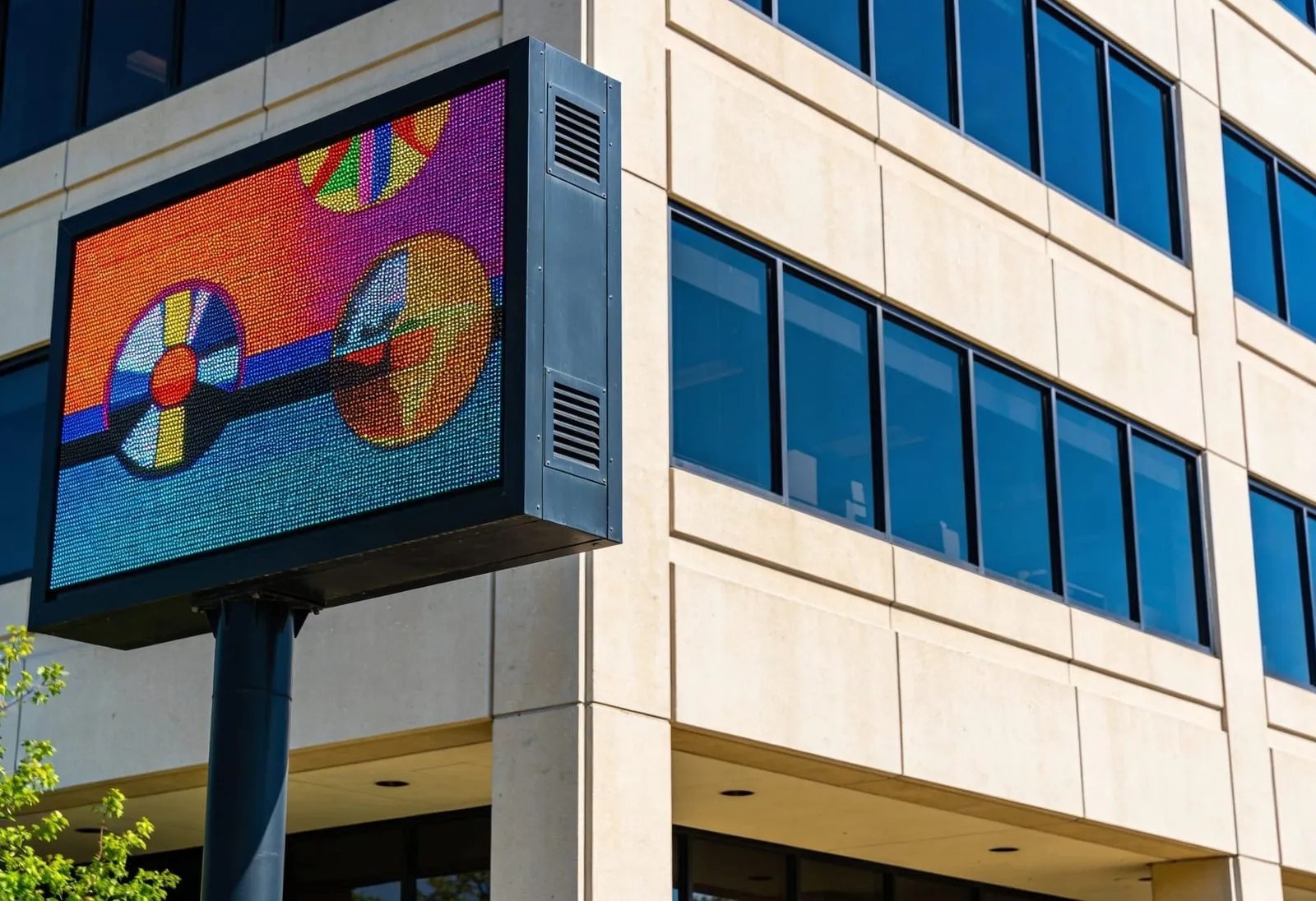
LED digital display signs are programmable electronic message centers that deliver full-color visual content to commercial properties across Indianapolis and surrounding regions. LED digital displays transform static signage into dynamic marketing tools with real-time message control. Midwest Signs installs and services these systems throughout Indiana, Illinois, Ohio, and Kentucky—offering 24-48 hour response times for national sign companies and facilities management partners. Our crews handle everything from permit coordination to multi-state project rollouts.
Why National Sign Companies Are Specifying LED Digital Displays for More Projects
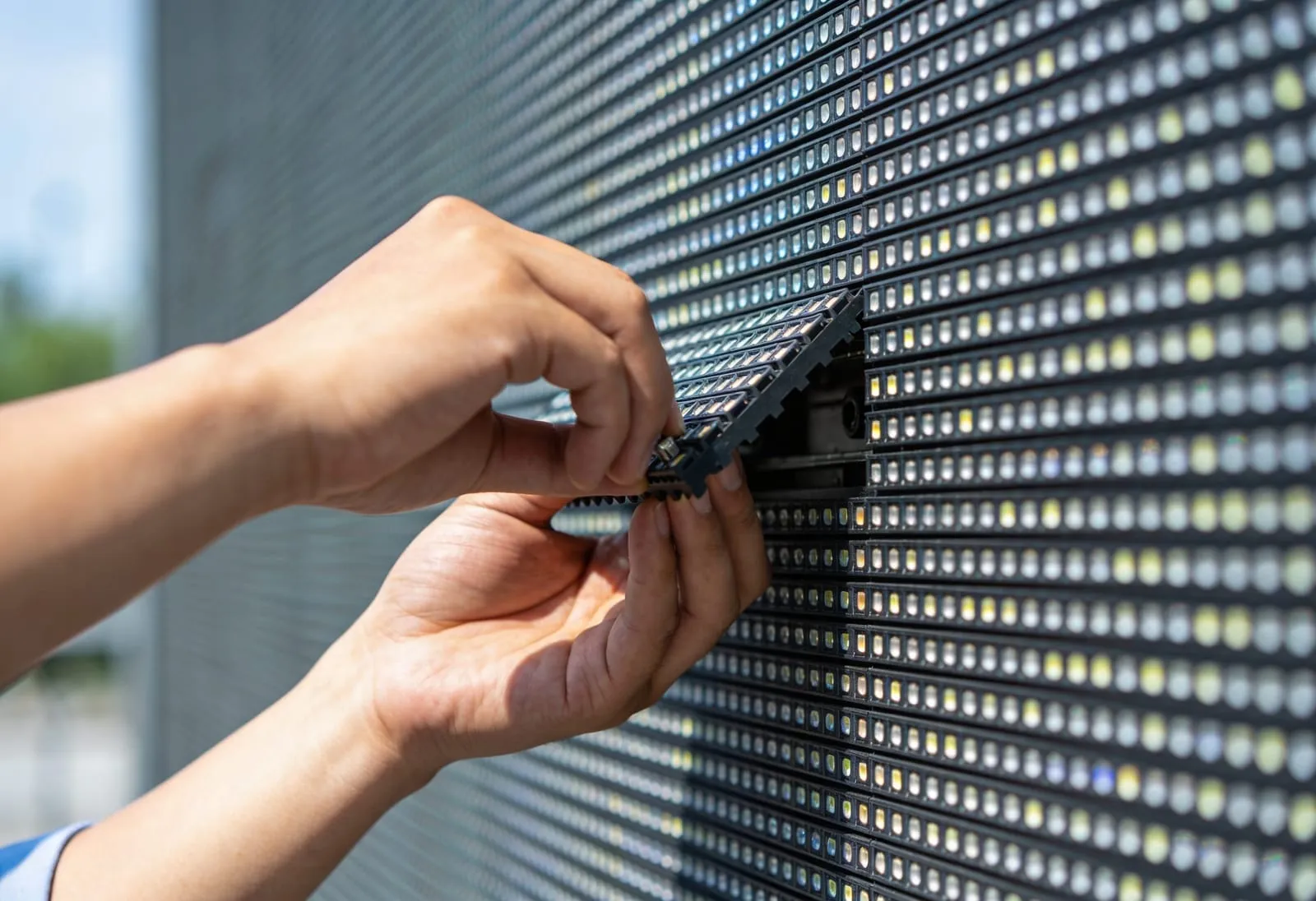
Procurement managers tracking campaign performance data report a measurable shift: LED digital display signs typically deliver 3-5 times higher customer engagement than static signage, with the ability to update messaging in real-time without service calls or downtime. That’s not marketing spin—it’s what national accounts coordinators see when they compare traffic analytics between properties with digital displays versus traditional static signs.
The ROI case has gotten stronger. LED digital displays eliminate the recurring costs that eat into static signage budgets: vinyl changes, production delays, installer labor for every promotional update. A QSR menu board update happens in seconds from a laptop instead of waiting days for new panels. Gas station price changes take minutes, not hours with a bucket truck and vinyl rolls.
Measurable Performance Advantages
Commercial properties with LED digital displays report 15-30% higher foot traffic compared to static signage locations, based on our experience coordinating multi-location rollouts across the Indiana-Illinois-Ohio-Kentucky region. Electronic message centers let you test messages, rotate promotions, and respond to inventory changes without touching the sign. Multi-tenant properties can sell rotating advertising slots instead of locking into single-tenant static faces.
Operational Cost Reductions
LED technology maturity has changed the maintenance equation. Modern digital signage systems run 100,000+ hours before component replacement—that’s over 11 years at 24-hour operation. Energy efficiency matters too: today’s LED modules pull 60-70% less power than older fluorescent or HID-lit cabinet signs. And here’s what matters most to project managers: no more emergency service calls every time your client needs to change a promotion. Message updates happen remotely through secure cloud platforms.
Considering LED digital display installation services for your next project? Our team coordinates permitting, engineering, and installation as a turnkey solution.
What Specs Actually Matter: Pixel Pitch, Brightness, and Viewing Distance
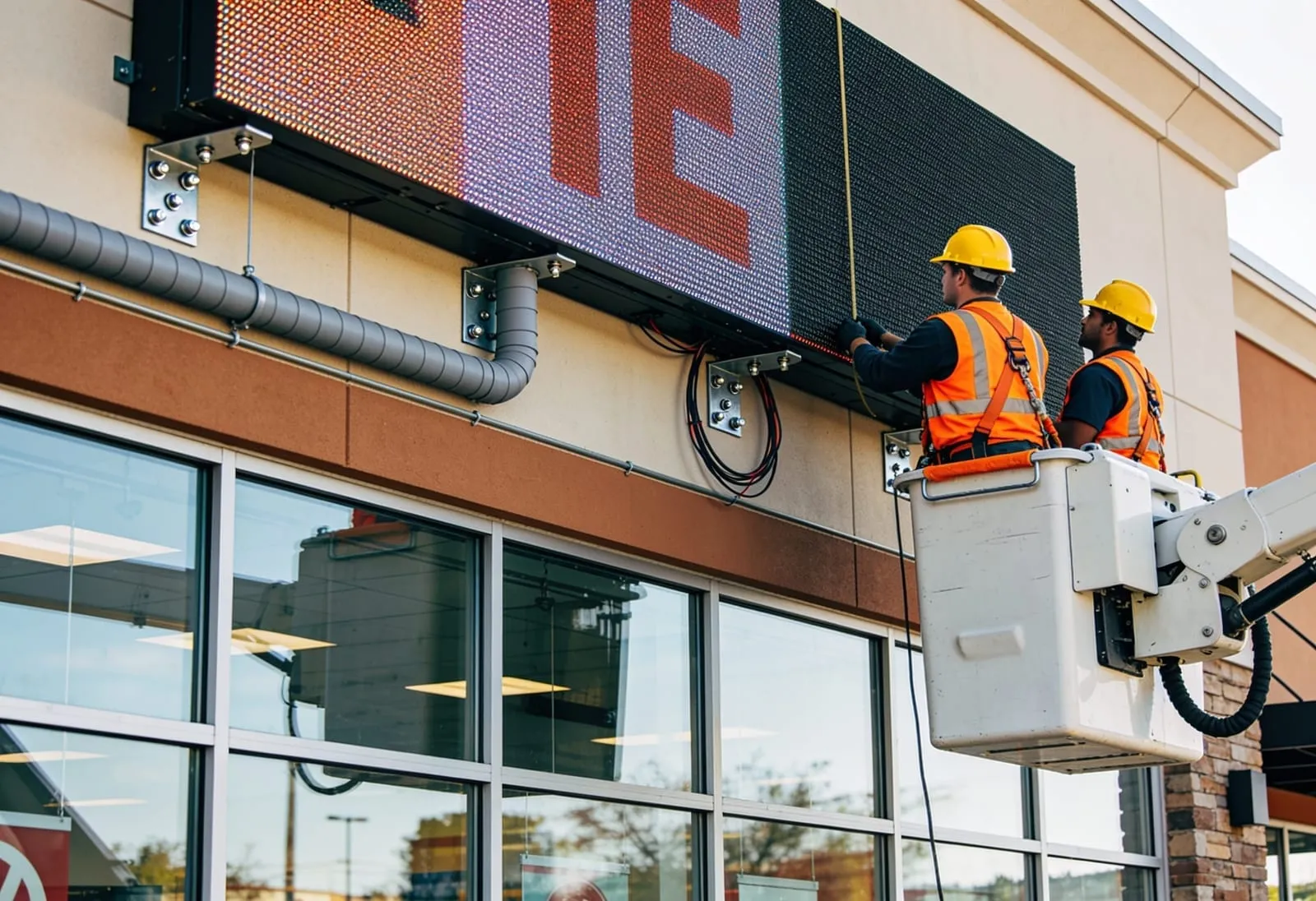
Pixel pitch is the distance between adjacent LED clusters on a digital display, measured in millimeters, that determines how crisp your message looks from the street. In 2026, commercial-grade LED displays have shifted from 10mm pixel pitch to 8mm or finer as the standard for clear readability at typical viewing distances of 50-150 feet. Based on our experience across hundreds of installations, 8mm pixel pitch displays represent 65% of new commercial installations, replacing older 10mm and 12mm standards.
Here’s what matters for spec’ing commercial digital displays. Brightness is measured in nits—those are candelas per square meter, though nobody actually calls them that anymore. You’ll need 5,000-7,000 nits for locations with direct sun exposure. Shaded installations near buildings or under canopies can work fine with 2,500-4,000 nits and cost less.
Understanding Pixel Pitch
The formula service partners use: pixel pitch × 1,000 = optimal viewing distance in feet. So an 8mm pitch display looks sharp from 80 feet, perfect for a Castleton retail center where we installed a unit visible from I-469 at highway speeds. But we see project managers over-specifying resolution constantly—putting a 6mm pitch on a sign that sits 200 feet from traffic. You’re paying 30-40% more for detail nobody will see.
Brightness Requirements by Application
| Application Type | Brightness (Nits) | Typical Pitch |
|---|---|---|
| Highway-facing, direct sun | 6,000-7,000 | 8-10mm |
| Retail parking lot, partial shade | 4,000-5,000 | 8mm |
| Building canopy, protected | 2,500-4,000 | 6-8mm |
Digital Display Signs Cost Breakdown: Hardware, Installation, and Hidden Factors
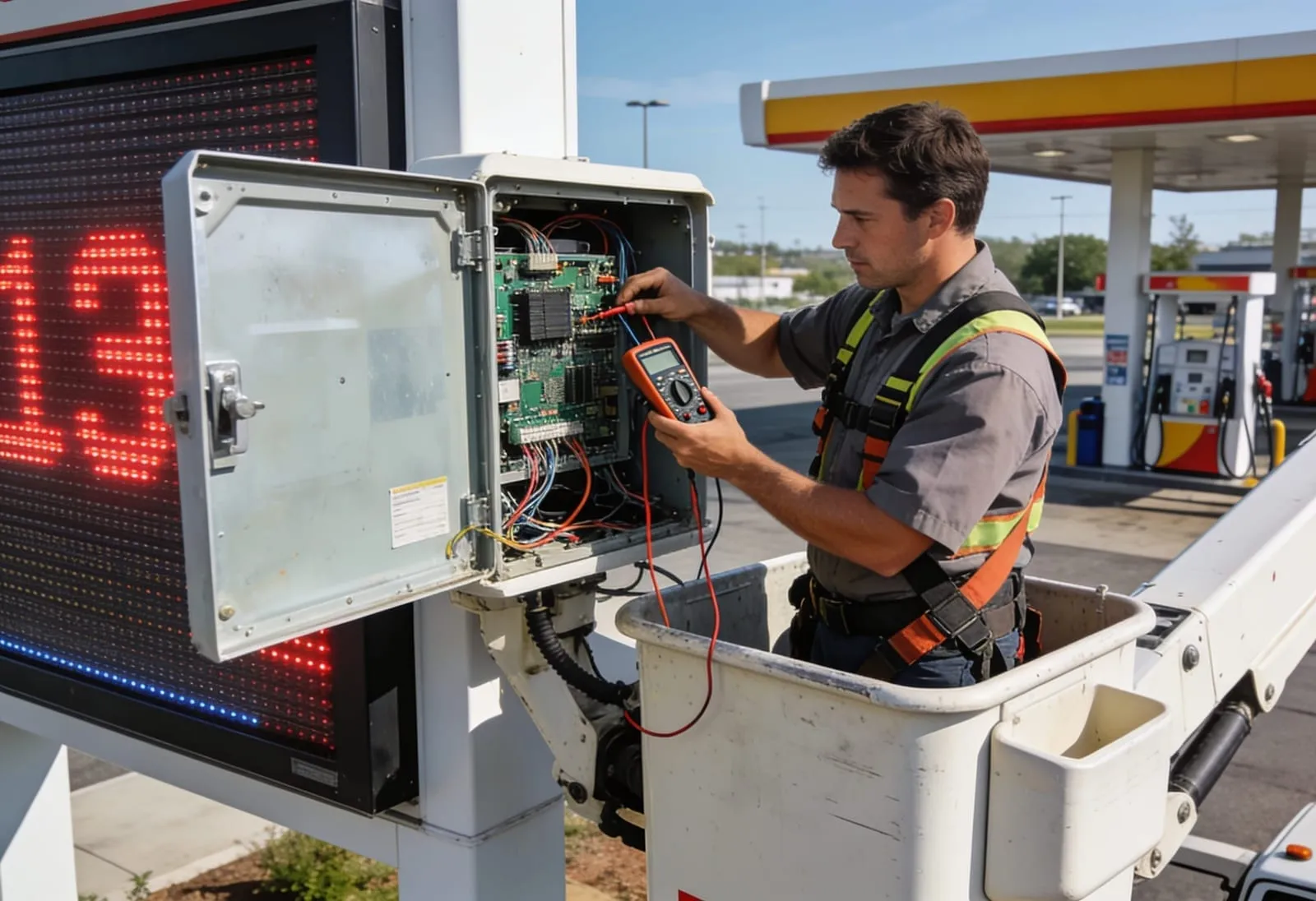
Installation costs for digital display signs range from $18,000 to $150,000+ depending on display size, pixel density, structural requirements, and whether existing sign structures can be retrofitted. That’s the honest range we give project managers when they’re budgeting multi-location rollouts across our Indiana-Illinois-Ohio-Kentucky service area.
Display Hardware Pricing Factors
LED sign cost starts with the display itself. A 4’x6′ single-sided monochrome message center runs $12,000-$18,000. Full-color displays in the same size jump to $22,000-$35,000. Double-sided configurations? Add 60-75% to those numbers.
Pixel pitch matters more than most procurement teams realize. Tighter spacing means sharper images but higher digital signage pricing—a 10mm pitch costs 40-50% more than 16mm for the same display area. Based on our experience with national sign company partners, most retail and QSR applications work fine with 16mm at typical viewing distances.
Installation Cost Variables
Here’s what drives message center installation cost beyond the display: structural engineering assessments run $1,500-$4,000 depending on existing foundation condition. Electrical service upgrades add $3,000-$8,000 if your site needs 200-amp service for larger displays. Foundation work ranges from $2,500 for simple concrete pads to $12,000+ for deep pier systems in challenging soil conditions.
Honestly, installation complexity—not just display cost—drives total project budgets, with structural engineering, electrical upgrades, and permit coordination often matching display hardware costs. We see this constantly on retrofit projects where existing pole signs weren’t engineered for digital loads.
| Cost Component | New Construction | Existing Structure Retrofit |
|---|---|---|
| Display Hardware | $18,000-$85,000 | $18,000-$85,000 |
| Structural Engineering | $2,000-$4,000 | $3,500-$8,000 |
| Foundation/Installation | $8,000-$15,000 | $12,000-$28,000 |
| Electrical Service | $3,000-$6,000 | $4,500-$12,000 |
| Permits & Coordination | $800-$2,500 | $1,200-$3,500 |
Indianapolis zoning requirements add another layer. You’ll need sign permits Indianapolis code officials review carefully, especially for displays visible from interstate corridors. FAA review kicks in above 200 feet from grade in certain flight path zones.
Get accurate project scoping and budget planning from our Indianapolis team—we handle site surveys and project scoping, structural assessments, and permit coordination so your regional rollouts stay on schedule and budget.
What Goes Wrong During LED Display Installation (And How to Avoid It)
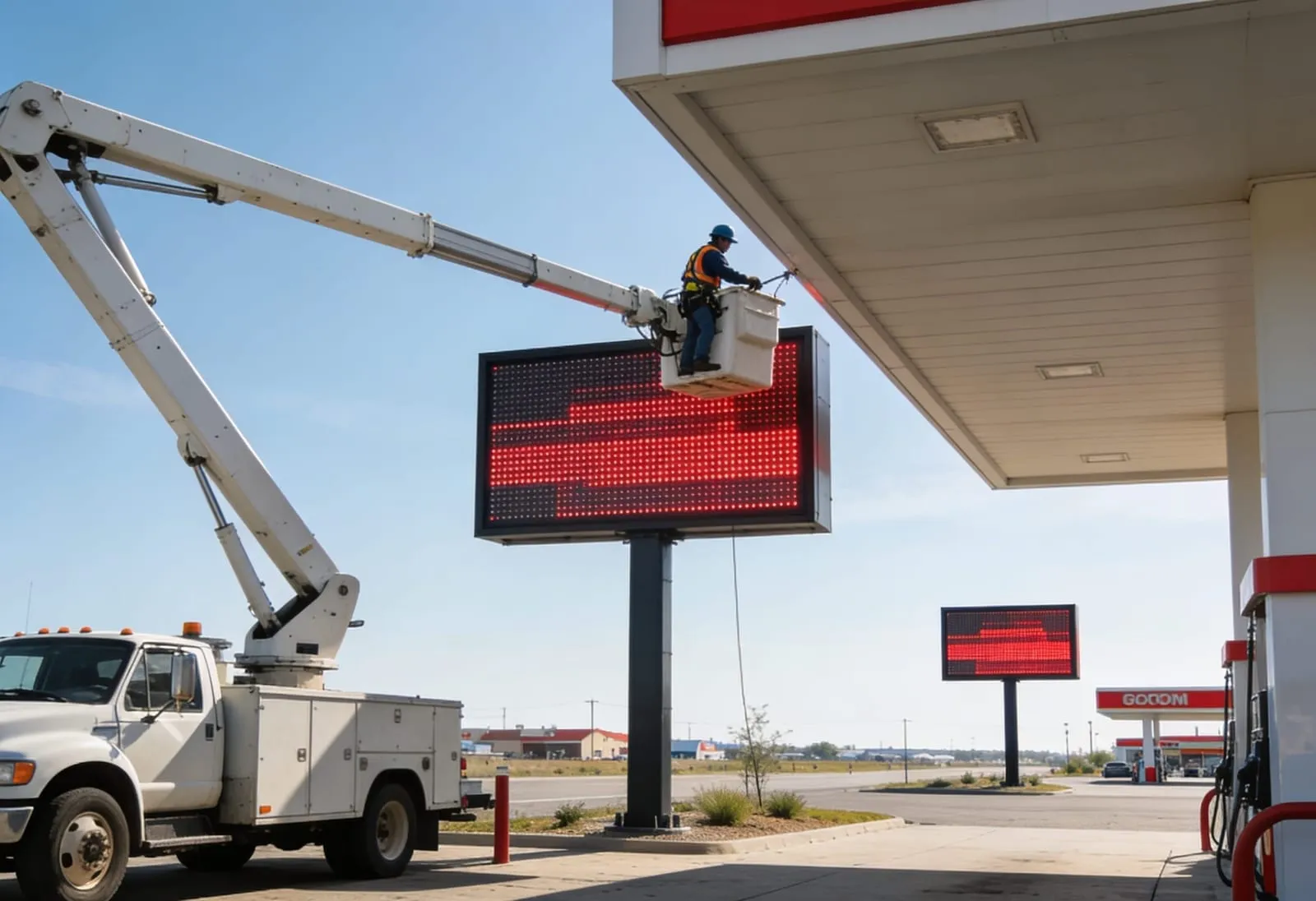
Here’s real talk from three decades of digital display signs installations: roughly 40% of LED display problems we troubleshoot trace back to inadequate structural engineering or undersized electrical service. Not the display itself—the foundation work that happens before the screen even arrives.
Weather protection failures sink projects constantly. Properly installed LED displays in the Midwest climate require weather-rated enclosures with operating ranges of -30°F to 140°F and IP65 or higher ingress protection ratings. An IP rating is a numerical classification that defines the degree of protection an enclosure provides against dust and moisture intrusion. Skip that spec, and you’ll be replacing components after the first winter freeze or summer heat wave.
Critical Technical Requirements
The electrical service equation catches most project managers off-guard. Digital display signs need dedicated circuits with 100-200A service depending on screen size and brightness specifications. Your existing building power won’t cut it—you’ll need commercial electrical service upgrades coordinated before installation day.
Network connectivity determines content management reliability. Cellular connections work for basic messaging, but hardwired ethernet prevents the dropouts that frustrate multi-location campaigns. These digital signage technical specs matter more than most procurement teams realize.
We recently handled a Broad Ripple retail installation that required complete foundation upgrades to meet wind load calculations. The client had budgeted for the display but not the structural engineering—installation complexity drives total project costs.
Permit and Engineering Coordination
Permit sequencing derails timelines faster than anything else. You need FAA clearance for height, zoning approval for location, electrical permits for power, and building permits for structural work—in that specific order. Miss the sequence, and you’re restarting the entire approval process.
Coordinating Multi-Location LED Digital Sign Rollouts Across the Region
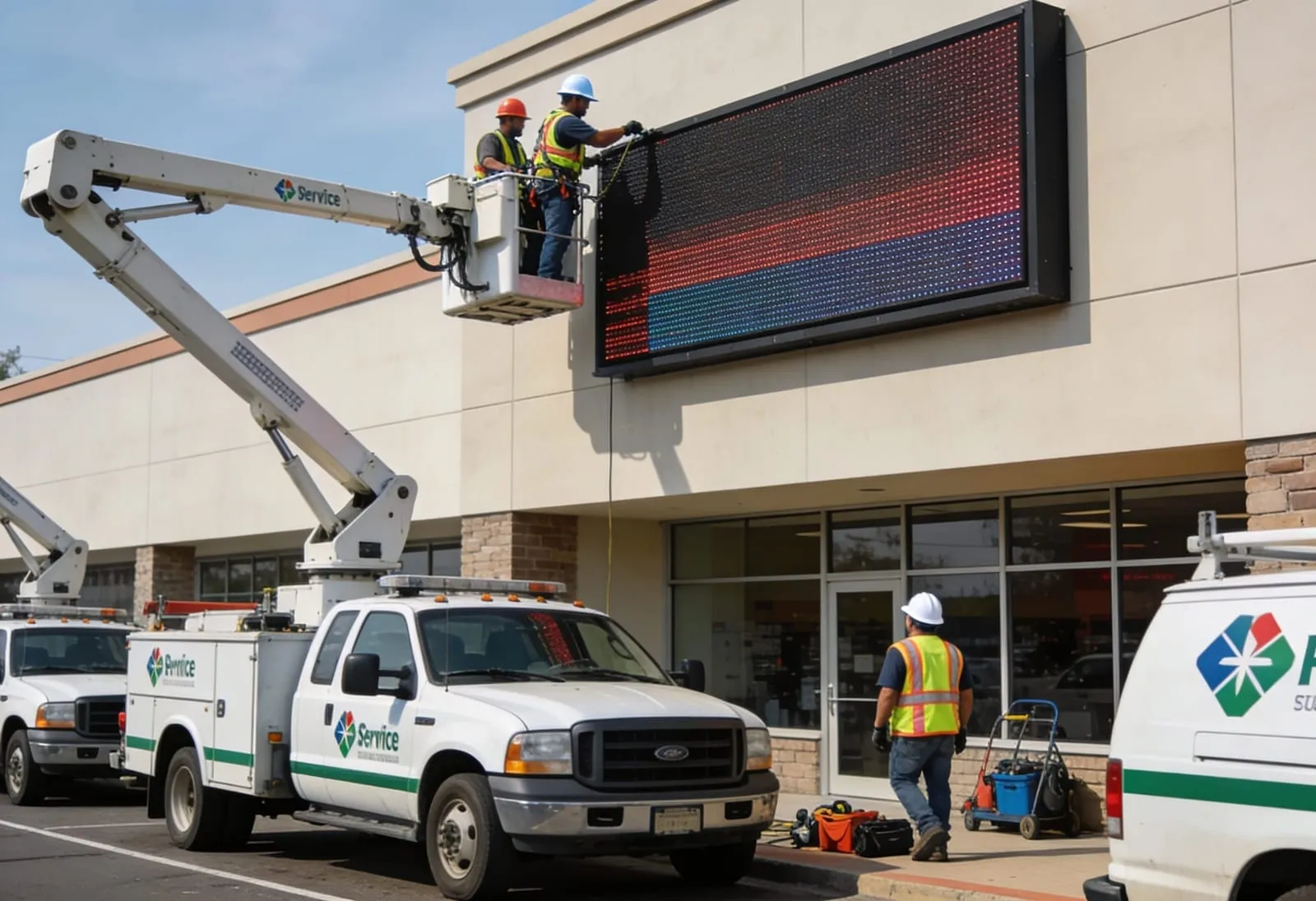
National sign companies need reliable service partners who’ll handle the messy middle of large-scale LED deployments—permitting timelines that vary by municipality, structural engineering reviews, power supply coordination, and installation crews who show up on schedule. We cover all of Indiana plus border regions in Illinois, Ohio, and Kentucky, which means you’re working with one team instead of juggling four different subcontractors across state lines.
Regional Project Coordination
A 12-location quick-service restaurant chain recently needed LED menu boards installed across southern Indiana and northern Kentucky within an 8-week window. National rollouts of LED digital displays succeed when the service partner coordinates permits, structural engineering, power upgrades, and content management training as a turnkey solution rather than separate vendor relationships. We handled permit applications in six different jurisdictions simultaneously, scheduled installations to match each location’s remodel timeline, and trained staff on content management systems during installation days.
Multi-location digital sign rollouts require synchronized permitting, installation scheduling, and content management systems that regional service partners can coordinate more effectively than national manufacturers. You get paperless field reports, photo documentation uploaded within 24 hours, and as-built drawings formatted for national account files.
Service Partner Advantages
When service calls come in—and they will—you’ve got 24-48 hour response across every installed location. One point of contact for regional rollout coordination beats managing separate vendor relationships in four states.
Managing a multi-location rollout? We coordinate regional LED display installations across Indiana, Illinois, Ohio, and Kentucky with single-point project management. Contact us about your next regional deployment.
Partner with Indianapolis LED Digital Display Experts
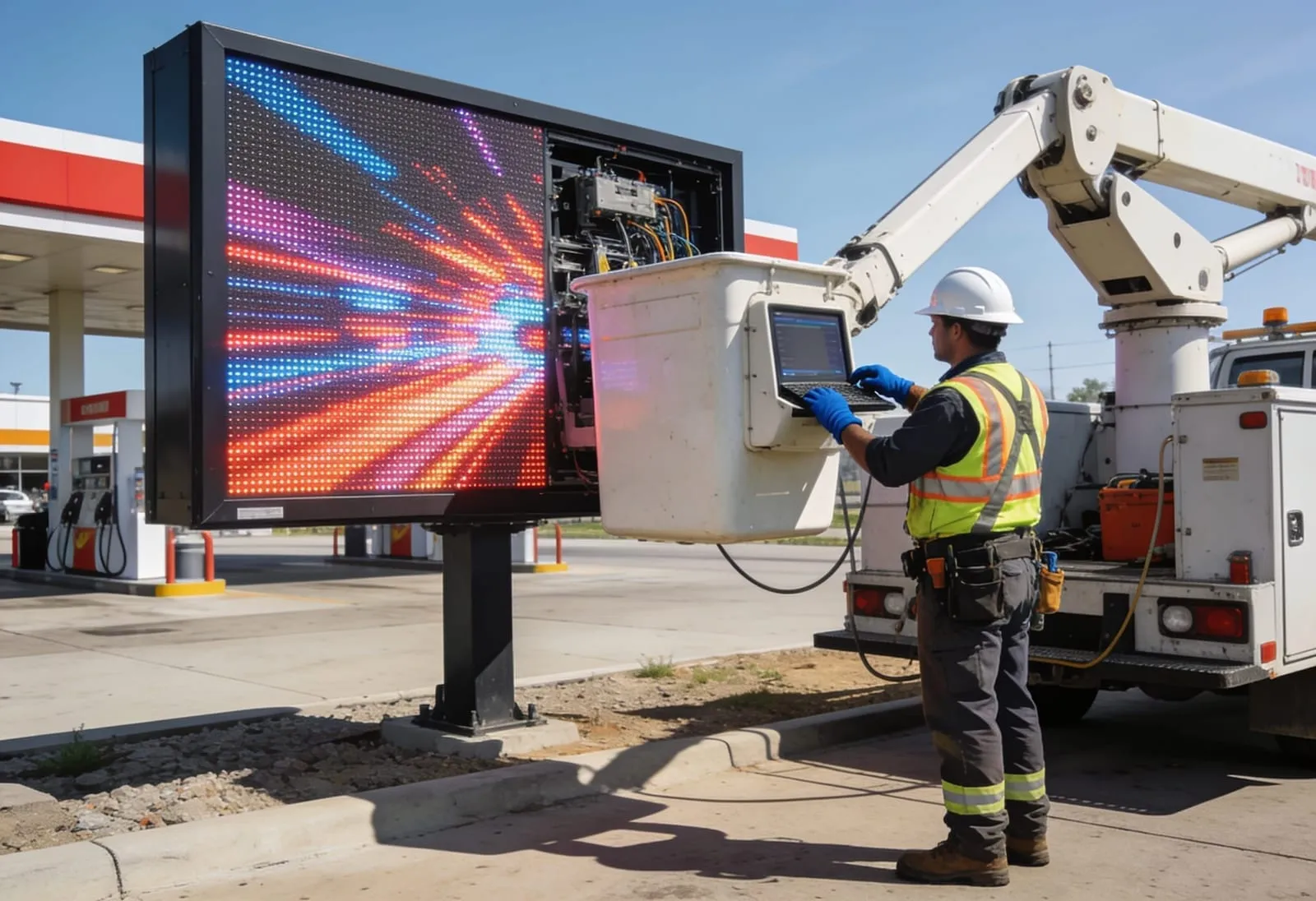
We’ve coordinated digital display signs for national sign companies and facilities management firms across Indiana, Illinois, Ohio, and Kentucky since 1988. Our Indianapolis-based team handles everything—permitting, structural engineering certifications, commercial sign installation, and on-site content training—so your multi-location rollouts stay on schedule.
With 40+ years in the sign industry, we’ve built our reputation on 24-48 hour response times and paperless documentation that streamlines project closeouts. Our certified technicians work directly with Daktronics, Watchfire, and other major LED manufacturers, delivering the turnkey coordination that procurement managers at companies like FASTSIGNS and National Sign Corp depend on.
Need a service partner for your next LED digital display project? Call (317) 800-6500 or contact us online for project consultation.
Frequently Asked Questions About LED Digital Display Signs
How long do commercial LED digital display signs last?
Commercial-grade LED digital displays have rated lifespans of 100,000+ operating hours, which translates to 10-15 years of typical use. Actual lifespan depends on operating environment, brightness settings, and maintenance. Displays in climate-controlled environments with regular cleaning and electrical maintenance often exceed manufacturer ratings. The power supplies and control systems typically require replacement before the LED modules themselves fail.
Do LED digital signs require permits in Indianapolis?
Yes, LED digital display installations in Indianapolis require multiple permits including zoning approval, electrical permits, and building permits for structural work. Signs exceeding 200 feet in height also require FAA review. Indianapolis zoning code regulates brightness levels, animation speeds, and operational hours for digital display signs. Permit timelines typically run 6-12 weeks depending on location and complexity. Experienced service partners coordinate the entire permitting process.
Can existing sign structures be converted to LED digital displays?
Many existing pylon and monument signs can be retrofitted with LED displays if structural engineering confirms adequate load capacity and foundation support. Retrofits require evaluation of electrical service capacity, structural wind load ratings, and local code compliance. Successful conversions typically cost 30-40% less than new ground-up installations. Structures from the 1990s or earlier often need reinforcement. A site survey and structural assessment determines retrofit feasibility before project planning.
What maintenance do LED digital displays require?
LED displays require minimal maintenance compared to traditional signage—primarily cleaning, electrical inspections, and software updates. Quarterly cleaning maintains brightness and prevents heat buildup. Annual electrical inspections check connections, power supplies, and control systems. Software updates ensure security and add features. Based on our experience across regional sign installation Indianapolis projects, facilities should budget $500-1,500 annually for preventive maintenance. Emergency service calls are rare with properly installed displays but justify partnering with regional service providers offering 24-48 hour response times.
How are LED digital display signs content and messages managed?
Content management systems allow remote programming via web browsers or mobile apps, updating messages instantly without site visits. Systems range from simple schedulers to sophisticated platforms managing hundreds of locations. Cloud-based systems offer cellular connectivity; hardwired systems use existing internet connections. Training typically requires 1-2 hours for basic operations. National rollouts benefit from standardized content management platforms that allow corporate control with local scheduling flexibility.
What’s the ROI timeline for commercial LED digital display signs?
Most commercial properties see 2-4 year ROI on LED digital displays through increased customer traffic, reduced labor costs for message changes, and advertising revenue opportunities. According to industry research tracking QSR locations, properties report 15-30% higher sales of promoted items. Gas stations see measurable lift in fuel volume from real-time pricing displays. Retail properties offset costs by selling advertising space to tenants, with multi-tenant properties reporting faster lease-up rates with dynamic property marketing.