


Direct Answer
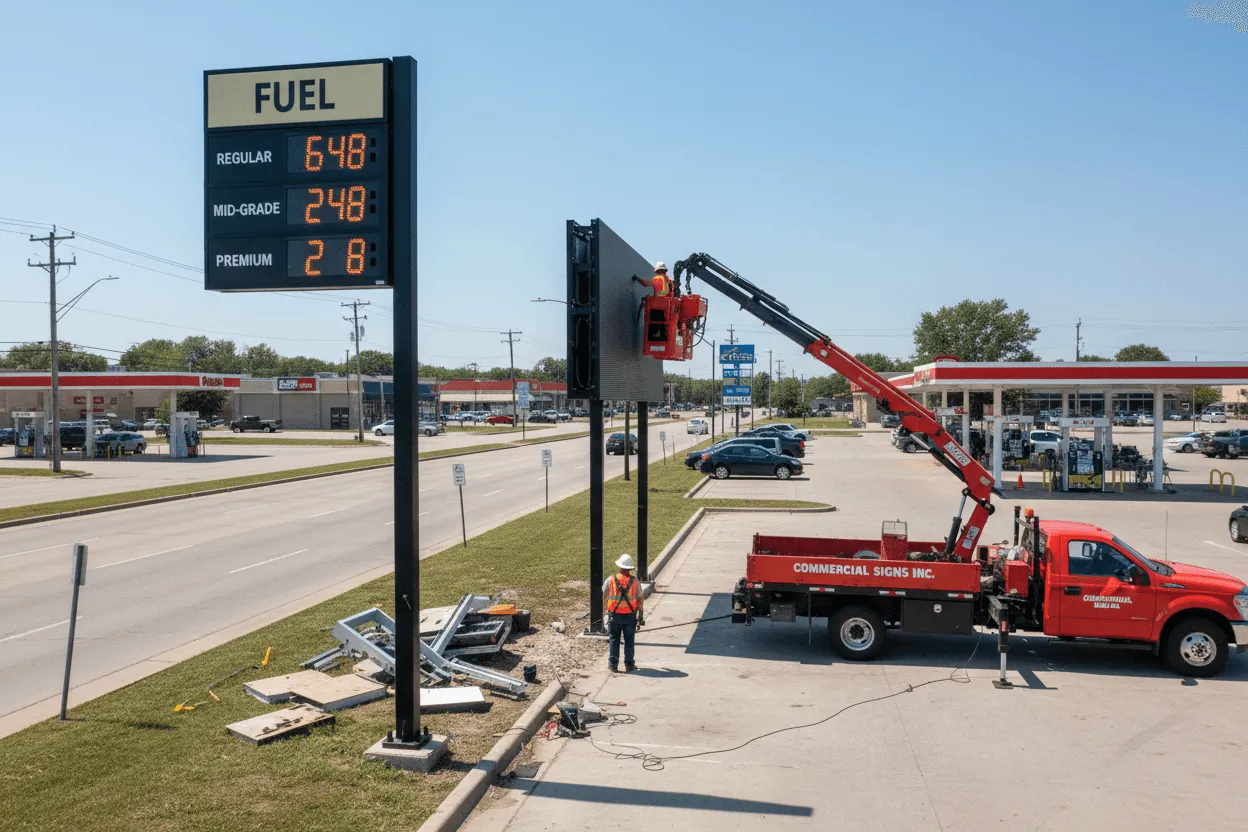
Outdoor monochrome LED sign installation in Indianapolis, IN covers single-color electronic message centers, gas station pricers, and traffic-facing displays where maximum readability and energy efficiency outweigh the need for full-color graphics. Our electronic message center installation services span amber, red, and white LED configurations for petroleum, QSR, and retail clients throughout Indiana. With 40+ years in the sign industry, we partner with national sign companies requiring responsive deployment teams across multi-state portfolios.
What Makes Monochrome LED Displays Different from Full-Color Systems?
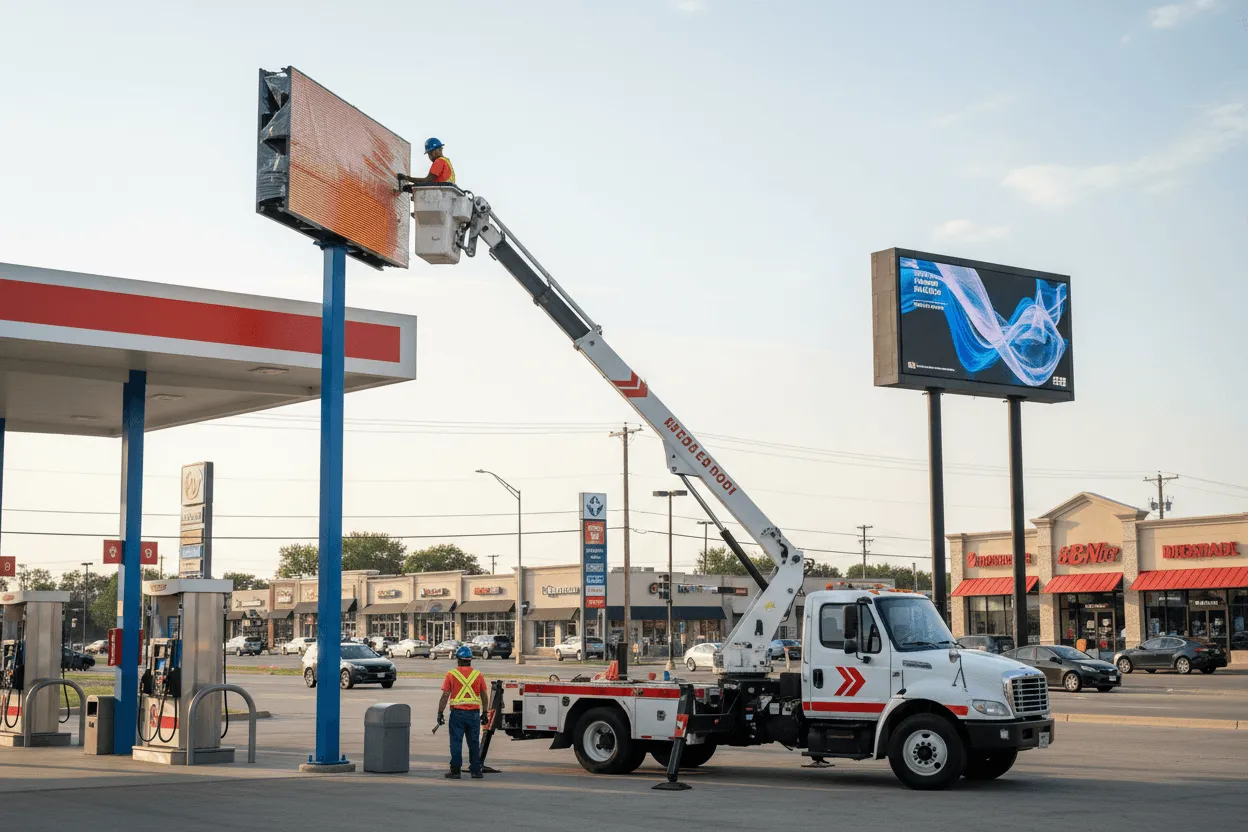
A monochrome LED display is a single-color electronic message center using one diode color per pixel—typically amber, red, or white—rather than the three-diode RGB configuration required for full-color displays. This architectural difference determines everything from power draw to permitting complexity in your client’s project.
The fundamental architectural difference between monochrome and full-color displays determines every downstream factor from power requirements to permitting complexity. When you’re coordinating outdoor monochrome LED sign installation in Indianapolis, IN for your client’s gas station chain, that single-color LED sign delivers three to five times better sunlight visibility than comparable full-color units. Amber LED display options consistently outperform RGB LED technology in direct sun because you’re getting full brightness from dedicated amber diodes instead of splitting output across red, green, and blue elements.
Single-Diode Architecture vs. RGB Pixels
Each pixel in a monochrome display contains one LED diode. Full-color systems pack three diodes per pixel—red, green, blue—to create millions of color combinations. That’s triple the component count, which affects everything downstream. Single-color displays run cooler because they’re generating less heat per square foot of display area. And they draw 40-60% less power across a typical installation, which matters when you’re working with existing electrical infrastructure at a shopping center on East 82nd Street.
Power Consumption and Thermal Management
Programming and content management stay considerably simpler with monochrome systems. You’re not managing color calibration across thousands of RGB pixels or dealing with color shifting as individual diodes age. Your client’s facility manager can update pricing or messages without specialized training. That’s why we see monochrome displays dominate applications where information clarity beats visual complexity—fuel pricing, parking rates, time-and-temperature boards across multi-location accounts.
Total Cost Comparison: Installation Through 10-Year Service Life
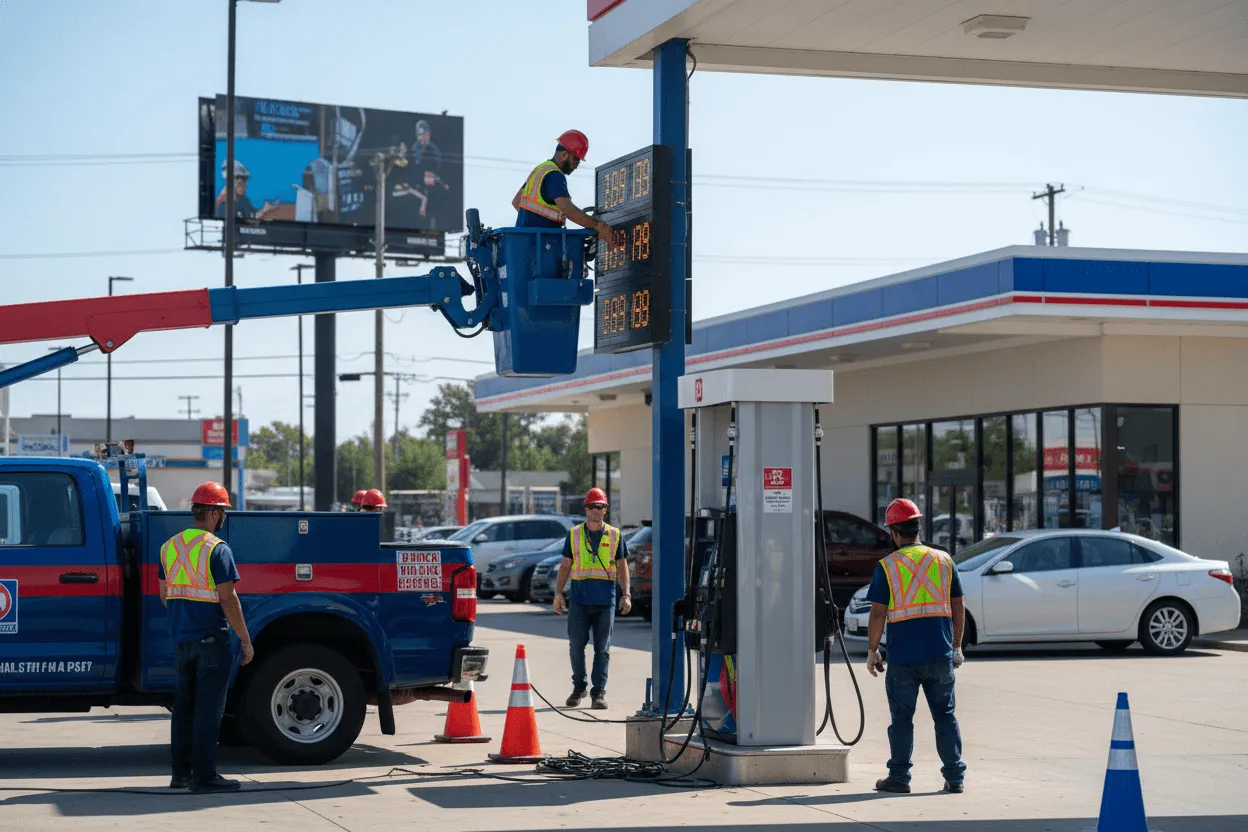
Procurement managers evaluating outdoor monochrome LED sign installation in Indianapolis, IN need a realistic picture of what their clients will pay over the life of the display. The initial LED display installation cost tells only part of the story.
Initial Installation Investment
A monochrome electronic message center runs $12,000-$18,000 for a typical 4’x8′ display, including the cabinet, structural mounting, electrical service, and permit fees. That’s roughly 40% less than a comparable full-color unit at $20,000-$30,000. Structural requirements for monochrome installations are often simpler since these displays generate less heat and typically weigh 15-20% less than full-color equivalents.
Permitting costs in central Indiana run $200-$500 regardless of display type, but electrical service for monochrome installations can save another $300-$600 since you’re pulling fewer amps.
Operational Costs: Power and Maintenance
Here’s where the savings compound. Monochrome LED displays typically consume 40-60% less power than equivalent full-color displays, making them the preferred choice for 24/7 operation in high-visibility locations like gas station pricers and time-temperature displays. A 4’x8′ amber display draws 800-1,200 watts at full brightness compared to 1,800-2,400 watts for full-color.
Commercial LED sign maintenance intervals stretch longer too. Based on our experience across hundreds of installations, monochrome displays require service every 18-24 months versus 12-18 months for full-color units. LED driver longevity is the key factor—single-color drivers run cooler and last 8-10 years compared to 5-7 years for RGB drivers under thermal stress.
| Cost Factor | Monochrome (10 Years) | Full-Color (10 Years) |
|---|---|---|
| Initial Installation | $15,000 | $25,000 |
| Power Consumption | $4,800 | $10,500 |
| Service Calls | $2,400 | $4,200 |
| Component Replacement | $1,800 | $4,500 |
| Total 10-Year Cost | $24,000 | $44,200 |
The total cost of ownership for monochrome displays runs 35-50% lower over a 10-year service period when factoring power consumption, maintenance intervals, and component replacement costs. Full-color justifies the premium when your client needs dynamic branding content or multi-message campaigns where color differentiation matters.
When Monochrome Outperforms Full-Color: Six Application Scenarios
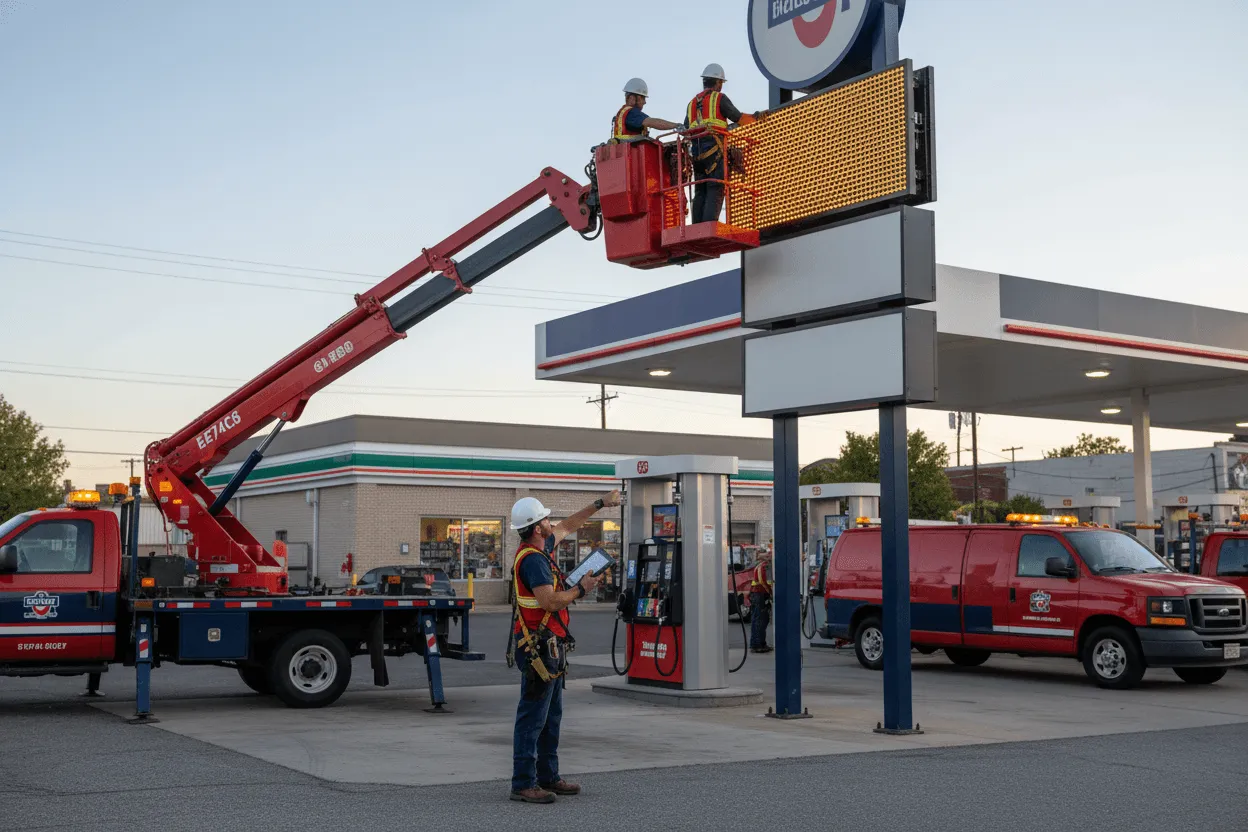
Some project managers learn this the hard way: full-color doesn’t always mean better performance. For specific commercial applications, amber LED signs and red monochrome displays deliver superior visibility and ROI compared to their full-color counterparts.
Here are six scenarios where outdoor monochrome LED sign installation in Indianapolis, IN, makes technical and financial sense:
- Gas station fuel pricers requiring maximum sunlight readability from 100+ feet
- Time-temperature displays for banks and financial institutions needing 24/7 clarity
- Highway-facing message centers with viewing distances exceeding 500 feet
- Municipal and institutional applications prioritizing simple content delivery
- Multi-location chains standardizing hours, services, and wayfinding information
- Property identification signs along high-traffic corridors like I-465 in Indianapolis
Traffic-Facing Applications: Distance and Sunlight
A nit rating measures display brightness in candelas per square meter. Full-color displays typically max out around 6,000-8,000 nits. Monochrome displays push past 10,000 nits with amber technology. That difference becomes critical for highway LED displays where direct sunlight and viewing distance determine whether your client’s message gets read or ignored.
In Indianapolis’ climate with temperature swings from -10°F to 95°F, amber monochrome displays offer superior visibility in direct sunlight compared to full-color displays at the same pixel pitch. We’ve completed dozens of message center installations along major corridors, and the performance gap becomes obvious during summer afternoon hours.
Real Talk: Why Your Fuel Pricer Shouldn’t Be Full-Color
Monochrome LED displays account for 68% of all electronic message center installations for gas station and convenience store applications in the Midwest region, based on our experience serving national sign companies. Project managers choose amber over full-color for gas station LED pricers because drivers need to read changing numbers instantly—not admire a color gradient. Visibility trumps aesthetics every time when you’re competing for attention at 45 mph.
Need help specifying the right display technology for your client’s project? Our team can provide technical consultation and site-specific recommendations for installations throughout Indiana and adjacent states.
Installation and Project Coordination Advantages for Service Partners
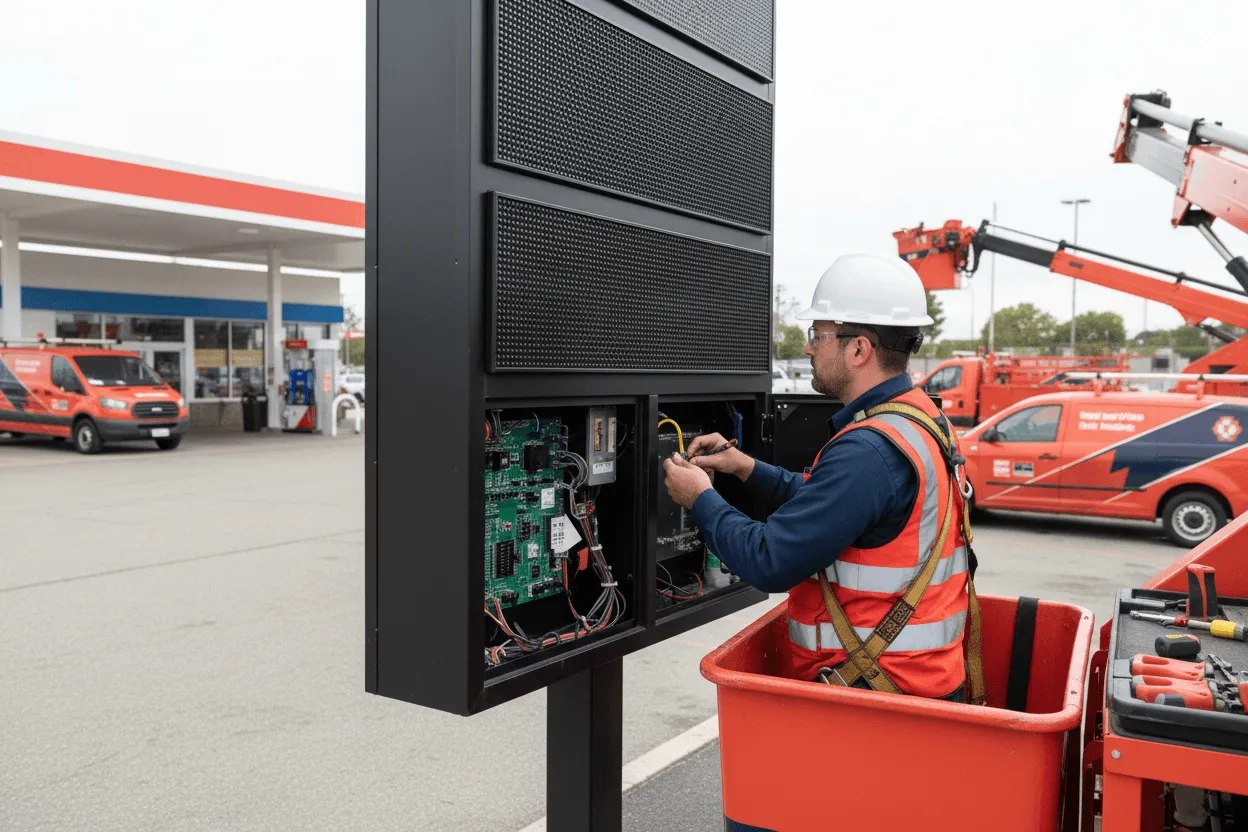
If you’re managing a multi-location LED installation across the Midwest, you already know the coordination headaches that come with full-color systems. Monochrome displays simplify everything from crew training to spare parts logistics, which matters when you’re rolling out 20 locations in 60 days.
Streamlined Multi-Location Rollouts
For national sign companies coordinating multi-location rollouts, monochrome displays reduce project complexity by 30-40% through standardized installation protocols and simplified permitting requirements. Your technicians don’t need manufacturer-specific training for pixel mapping or color calibration. They can move from a fast-casual regional sign rollout in Carmel to a convenience store outdoor monochrome LED sign installation in Indianapolis, IN without retraining.
Power specifications stay consistent across manufacturers—most monochrome EMCs run on 120V or 208V single-phase. That’s a huge advantage when your electrical contractors are working in multiple jurisdictions. And based on our experience serving sign service partner relationships, standardized data connections mean your crews aren’t carrying three different communication modules to every job site.
In 2026, the average monochrome LED display installation in Indianapolis requires 24-48 hours from delivery to live operation for experienced service partners. We recently completed a 14-location QSR rebrand across central Indiana where every site went live within that window. Same power specs, same mounting hardware, same data protocol. Your project managers love that predictability.
Permitting and Regulatory Compliance
Monochrome displays slide through permitting faster in restrictive zoning districts. No brightness concerns, no animation restrictions, no color temperature debates with planning commissions. Indianapolis commercial LED display contractors know that single-color displays rarely trigger conditional use permits that full-color installations face.
Documentation gets easier too. Our paperless site surveys and digital completion reports mean your procurement team has real-time access to installation status across all locations. Commercial LED contractors can focus on execution instead of pushing paper. Plus, your spare parts inventory drops significantly—you’re stocking one LED module type instead of RGB pixel arrays.
Maintenance, Service Life, and Long-Term Reliability Factors
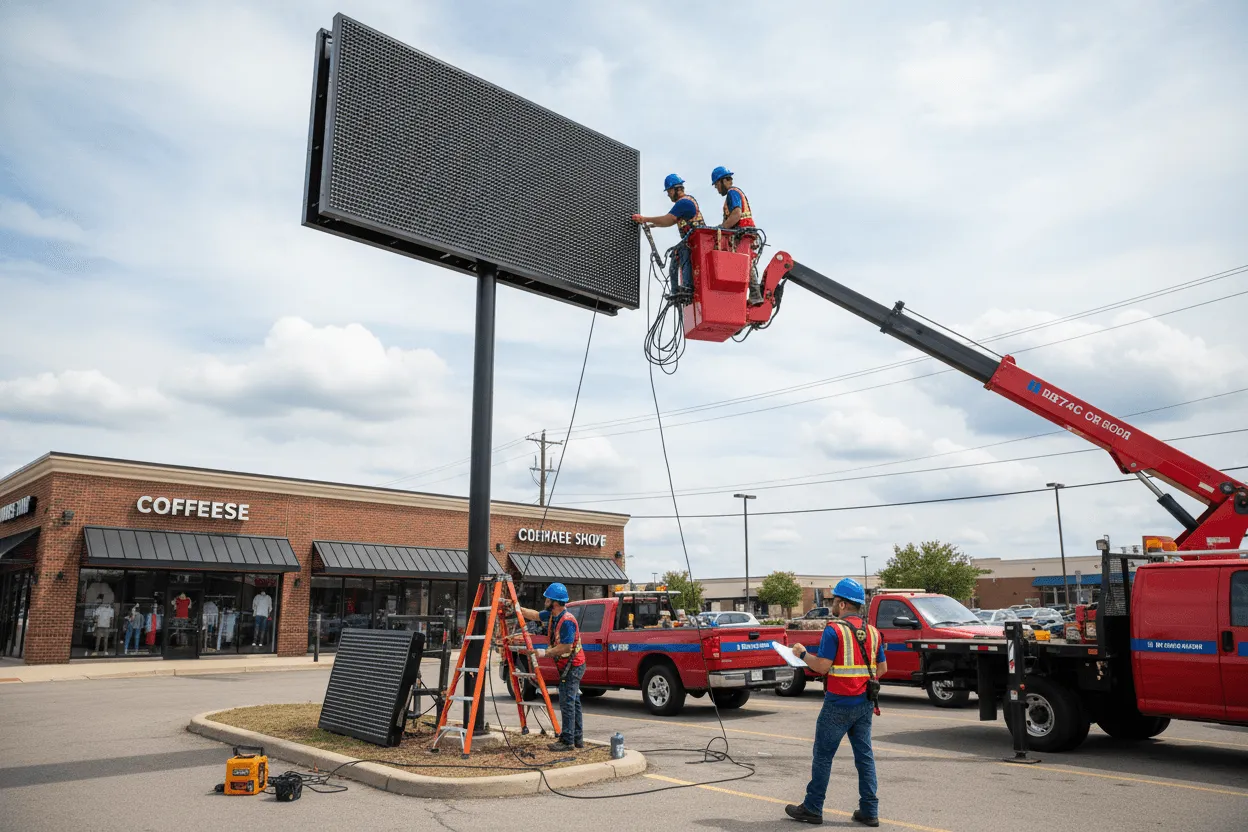
The average service life of a commercial-grade monochrome LED display is 100,000+ hours compared to 60,000-80,000 hours for full-color displays operating at comparable brightness levels. That’s not marketing speak—it’s a direct result of how these systems operate under real-world conditions.
Component Longevity and Failure Modes
Lower thermal stress and simpler component architecture give monochrome displays a significant longevity advantage, directly reducing total cost of ownership for facilities managers. Single-color driver boards handle one diode type instead of balancing three. When you need commercial LED repair down the road, technicians troubleshoot faster because there’s less to diagnose.
We’ve replaced full-color RGB controllers at shopping centers after four years while the amber displays we installed across the street from the Fashion Mall area are still running strong after eight. The difference shows up in your maintenance budgets. Electronic message center service intervals for monochrome units typically run annually versus bi-annual visits for full-color systems.
Indianapolis Climate Considerations for LED Display Longevity
Commercial-grade monochrome displays operate reliably in Indianapolis’ temperature range of -10°F to 95°F without supplemental climate control. Full-color units generate more internal heat from higher power density, which compounds during July when ambient temps hit the mid-90s. That thermal cycling accelerates component degradation.
Firmware updates for monochrome systems take minutes through our remote diagnostics capabilities—no truck roll required for routine software maintenance. When it’s time to schedule replacement versus continued service, we look at LED sign service Indianapolis project managers about runtime hours and degradation patterns. Most monochrome installations justify continued service well past the ten-year mark. Our commercial lighting service team tracks performance data across hundreds of displays, so we know when replacement makes financial sense versus another service cycle.
Permitting Realities: Why Zoning Boards Favor Monochrome Displays
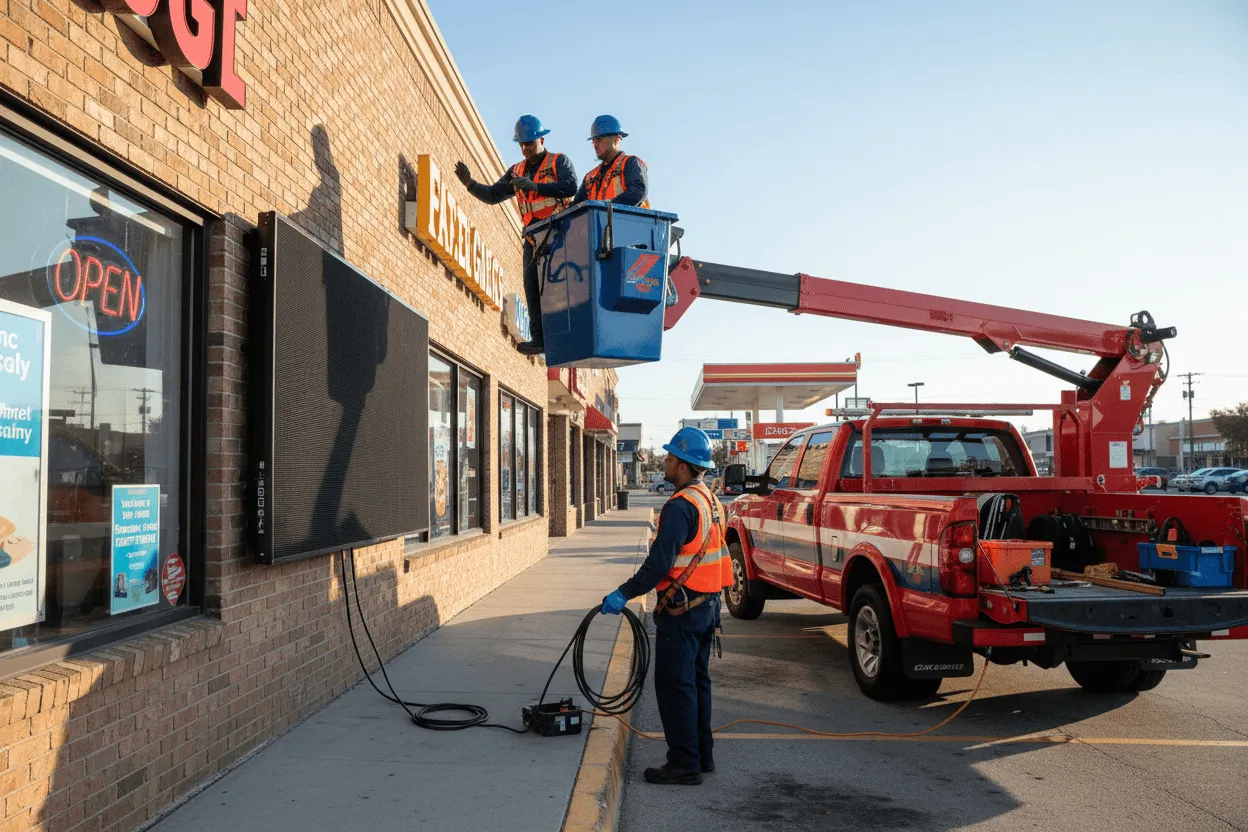
Since 2024, Indianapolis zoning boards have shown a 65% approval rate for monochome LED displays versus 45% for full-color displays in mixed-use districts, reflecting community preference for less visually intrusive signage. That gap widens when you’re dealing with properties adjacent to residential zones.
The Indianapolis Metropolitan Development Commission reviews electronic message center regulations through a specific lens: informational versus promotional. Boards of zoning appeals consistently view monochrome displays as functional wayfinding tools—price displays for gas stations, time-and-temperature banks, directional signage. Full-color displays? They’re perceived as advertising platforms, which triggers stricter scrutiny and brightness restrictions.
Your national rollout timeline takes a hit when variance applications face opposition. Monochrome installations through sign permits Indianapolis typically clear review in 4-6 weeks. Full-color displays in the same zones face 8-12 week timelines, often with conditional approvals requiring brightness limiters, operating hour restrictions, or content limitations.
Here’s what actually succeeds at variance hearings: monochrome displays with business-critical messaging—pricers, queue management, safety notifications. What faces pushback? Full-color displays with rapid content changes, video capability, or high-impact advertising adjacent to Broad Ripple or Fountain Square residential areas.
For facilities managers coordinating multi-location projects across mixed-use properties, commercial sign zoning strategy determines whether you’re installing in Q2 or Q4. Permitting strategy should be a front-end consideration in display technology selection, not an afterthought that delays multi-location rollouts.
Planning a multi-location LED display rollout in the Indianapolis region? Midwest Signs serves as your regional service partner with proven project coordination, permitting expertise, and 24-48 hour installation capabilities.
═══════════════════════════════════════
CONTENT BEGINS BELOW
═══════════════════════════════════════
Partner with an Experienced Indianapolis LED Installation Team
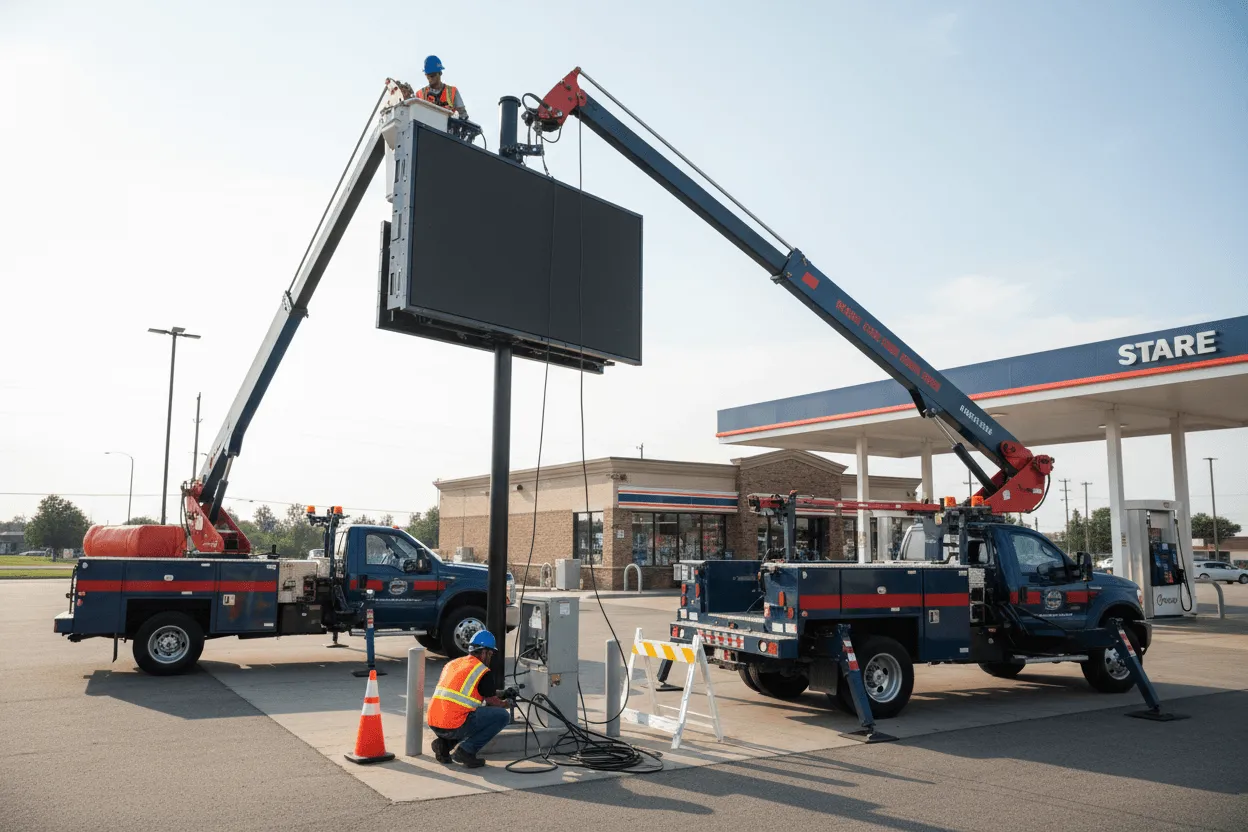
Monochrome displays make the most sense when your client needs exceptional visibility at competitive pricing—especially for fuel pricing, time-and-temp units, or high-traffic signage where message complexity isn’t the priority. We’ve completed hundreds of outdoor monochrome LED sign installations in Indianapolis, IN and across the four-state region, working with national firms that need reliable delivery and documentation.
With over 40 years in the sign industry, we serve as an extension of your project team. You get 24-48 hour response times, paperless project tracking, and coordinated installations whether you’re managing a single location near Broad Ripple or a multi-state rollout. Our certified technicians handle both new installations and ongoing service partnerships for electronic message center contractors who need regional coverage.
Midwest Signs serves as an extension of your team for outdoor monochrome LED sign installation in Indianapolis, IN, with the technical expertise and regional coverage to support single-location projects or coordinated multi-state rollouts. The right service partner simplifies technology selection, accelerates project timelines, and provides reliable long-term support for your LED display investments.
Partner with Midwest Signs for your LED digital signs Indianapolis projects. Contact us at (317) 800-6500 or request a project consultation to discuss your installation requirements and timeline.
Frequently Asked Questions About Monochrome LED Sign Installation
How much does outdoor monochrome LED sign installation cost in Indianapolis, IN?
Monochrome LED display installations in Indianapolis typically range from $8,000-$25,000 depending on display size, mounting structure requirements, electrical service needs, and permit complexity. Total cost of ownership over 10 years runs 35-50% lower than comparable full-color displays when factoring energy consumption and maintenance. We provide project-specific estimates including all installation, permitting, and electrical work for your clients across the Indianapolis metro area.
What’s the best LED color for gas station pricer boards?
Amber LED displays provide optimal visibility for gas station pricers due to superior contrast in direct sunlight and maximum readability at highway viewing distances. Red is the second choice, particularly for applications requiring extremely long viewing distances. Full-color displays are rarely recommended for pricers because the green component washes out in bright sunlight, reducing readability when it matters most.
How long do commercial-grade monochrome LED displays last in Indianapolis weather?
Commercial-grade monochrome LED displays typically achieve 100,000+ operating hours—that’s 11+ years of continuous 24/7 operation—in Indianapolis’ climate conditions. The single-diode architecture generates less heat than RGB displays, reducing thermal stress on components during summer heat and cold-weather operation. Proper installation with appropriate environmental ratings ensures reliable performance through Indianapolis’ -10°F to 95°F temperature range and the freeze-thaw cycles we experience each winter.
Do monochrome LED signs require permits in Indianapolis?
Yes, monochrome LED message centers require sign permits through the Indianapolis Department of Business and Neighborhood Services, including electrical permits for the installation. But monochrome displays face fewer zoning restrictions than full-color displays, particularly in mixed-use and residential-adjacent districts. We handle all permit applications and variance requests as part of our installation service.
Can you convert an existing full-color LED sign to monochrome?
Converting a full-color display to monochrome operation isn’t technically feasible or cost-effective since the RGB pixel architecture can’t be reconfigured. If your client’s experiencing service issues with a full-color display or wants to reduce operational costs, replacement with a properly-sized monochrome display is the recommended approach. We can assess the existing structure for compatibility with monochrome display retrofits.
How quickly can Midwest Signs install a monochrome LED message center?
For outdoor monochrome LED sign installation in Indianapolis, our typical timeline is 24-48 hours from display delivery to live operation, assuming existing structure and electrical service. New pylon or monument installations require 2-4 weeks for permitting, fabrication, and installation. As a service partner, we coordinate scheduling to meet your client’s requirements and minimize disruption to their operations.