


Direct Answer
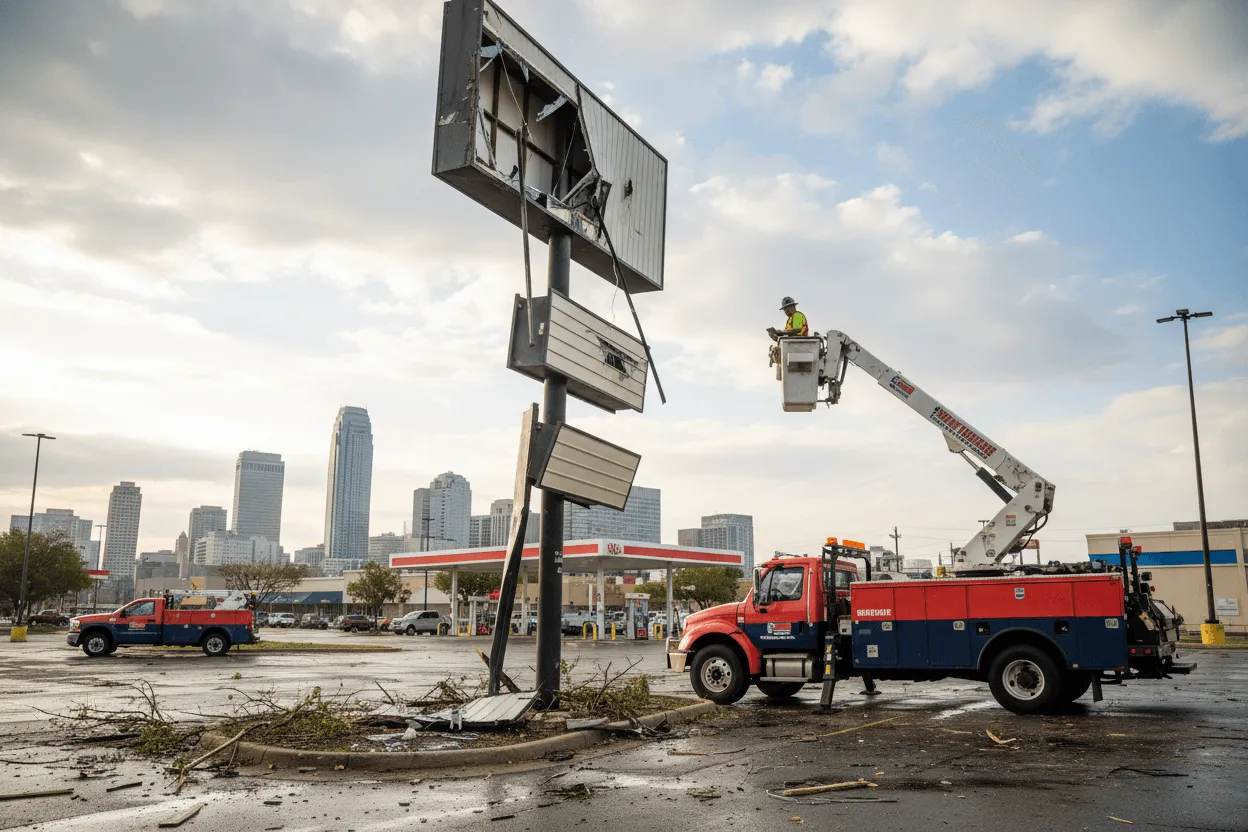
Emergency sign service in Indianapolis is a 24-48 hour response program that includes on-site storm damage assessment, GPS-tagged photo documentation for insurance claims, temporary safety measures like disconnection or barricading, and coordination with property managers or national sign partners. Emergency sign service in Indianapolis requires 24-48 hour response times for commercial properties, with proper insurance documentation including time-stamped damage photos, service reports, and structural assessments completed before temporary repairs begin. We handle commercial sign repair across Indiana, Illinois, Ohio, and Kentucky for national sign companies needing reliable local partners.
========================================
WRITING SECTION NOW — MIDWEST SIGNS
========================================
Why 24-48 Hours Is the Real Emergency Sign Service Timeline (Not ‘Same Day’)
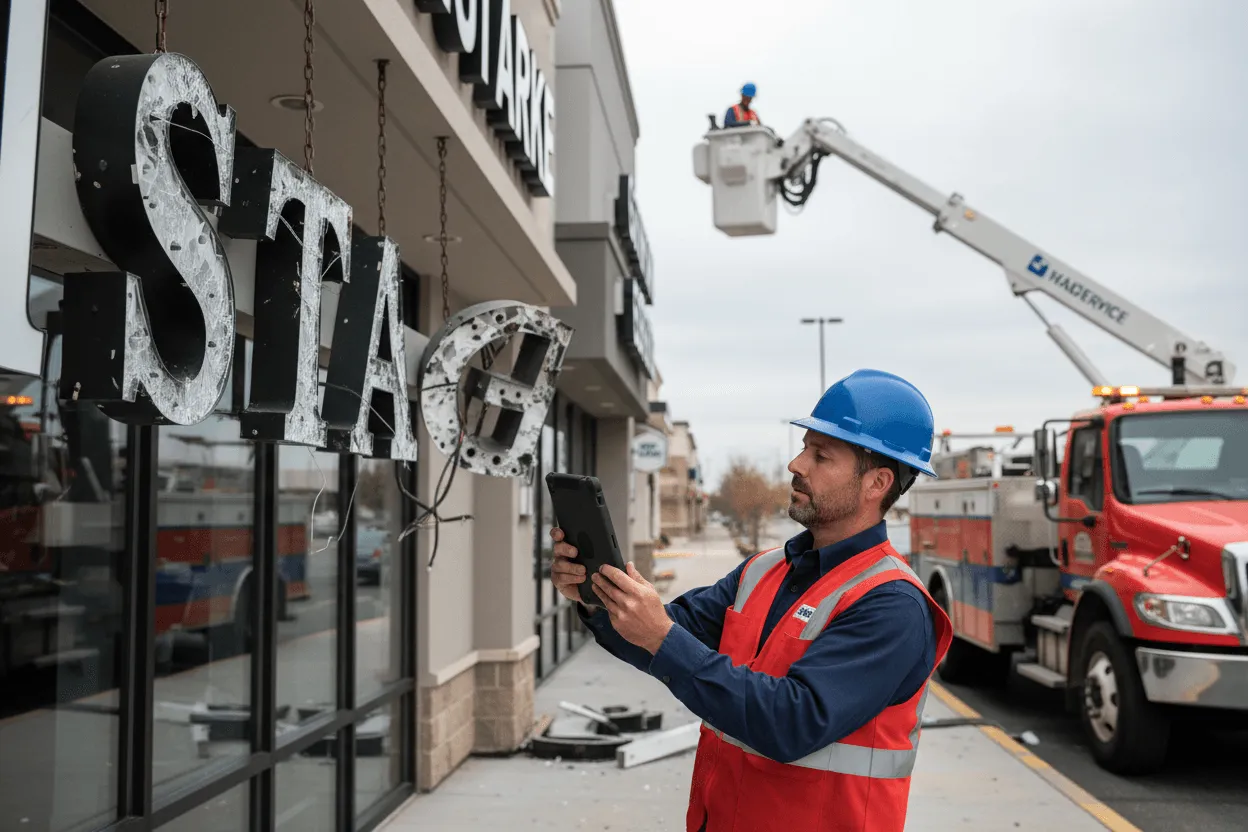
Same-day promises sound great until your insurance claim gets denied because nobody documented the damage properly. When regional storms knock out dozens of signs across your portfolio, rushing crews to “fix” things immediately actually costs you more than waiting 24-48 hours for proper assessment. The 24-48 hour response window exists to assess damage properly, not to complete repairs—understanding this timeline prevents unrealistic expectations during multi-site storm events.
Here’s what actually happens during those first two days: safety assessment to secure dangling components, GPS-tagged photo documentation of every failure point, structural evaluation that your insurance adjuster needs, and coordination with local Indianapolis sign repair permit requirements. After 40+ years managing commercial sign service and installation across multi-state storm events, we’ve learned that skipping this documentation phase guarantees claim delays.
What Happens in the First 24 Hours After Storm Damage
Our emergency sign response time focuses on safety and evidence collection. We secure hazardous conditions, photograph damage from multiple angles with timestamp and GPS data, and assess whether wind, hail, or structural failure caused the issue—because insurance companies care about the difference. In Indianapolis, spring storm patterns mean adjusters are overwhelmed in May and June, so complete documentation on day one keeps your claim moving.
| Timeline | Action | Deliverable | Purpose |
|---|---|---|---|
| 0-8 hours | Safety assessment | Site secured, hazards eliminated | Prevent liability |
| 8-24 hours | Damage documentation | GPS-tagged photos, failure analysis | Insurance submission |
| 24-48 hours | Repair quote and scheduling | Scope of work, timeline confirmation | Partner coordination |
Midwest Signs maintains 24-48 hour emergency response times across all of Indiana for national sign company partners. That’s responsive 24 hour sign repair with proper storm damage assessment—not rushed work that creates problems later.
Insurance Documentation Requirements for Storm-Damaged Commercial Signs in 2026
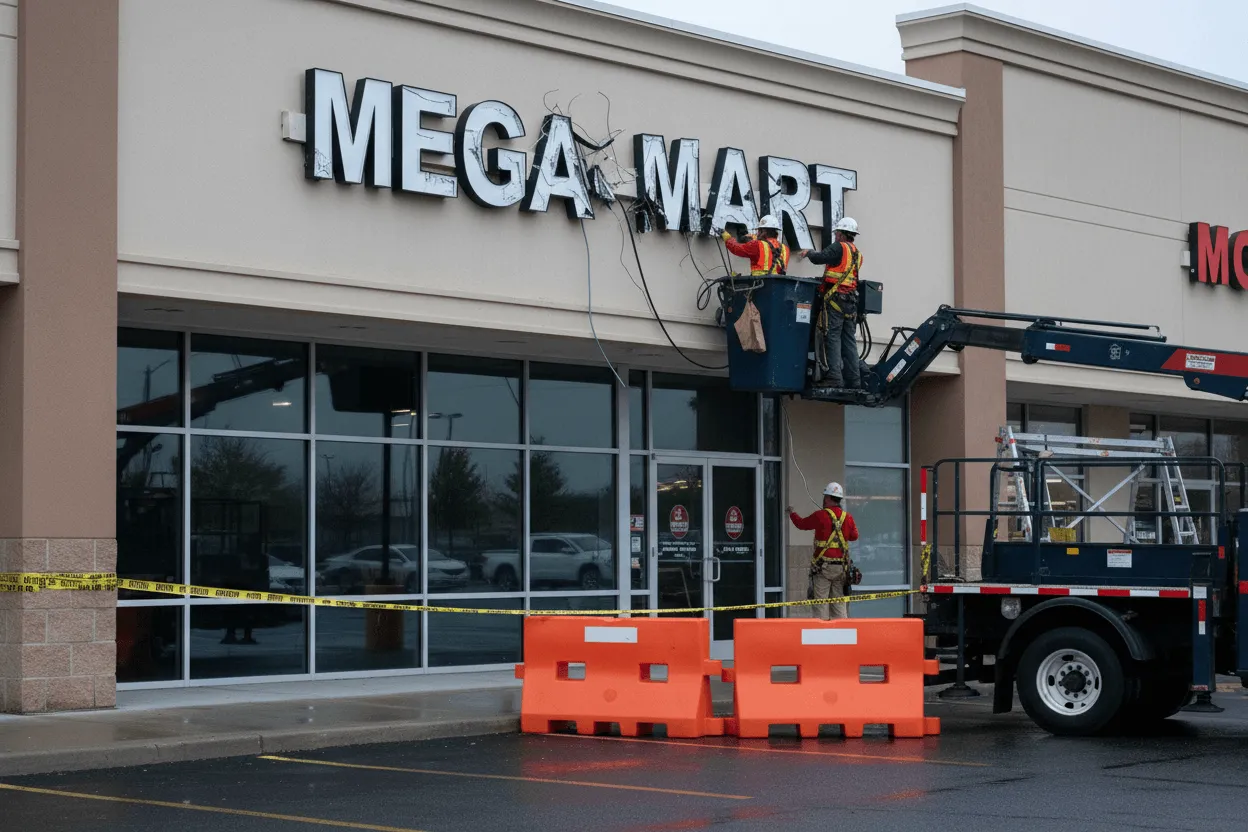
Insurance documentation standards have changed dramatically since pre-2020. Commercial insurance adjusters in Indiana require minimum 12-photo documentation sets for sign damage claims exceeding $5,000 in 2026. Miss a single required element and you’ll face delays, lowered settlements, or outright denials.
The 8 Documentation Elements Insurance Adjusters Require
A structural integrity assessment for signage is a comprehensive evaluation of mounting systems, cabinet construction, and electrical components that determines whether a storm-damaged sign poses safety risks or requires replacement. Here’s what adjusters demand:
- GPS-tagged photos showing exact sign location and damage extent
- National Weather Service wind speed data from the specific date and location
- Structural integrity assessments documenting mounting and support damage
- Pre-damage photos proving prior condition (if available)
- Electrical system documentation including any lighting failures
- Property damage context showing surrounding impact in the area
- Repair vs. replacement cost analysis with specific line items
- Timeline documentation proving damage occurred during the verified storm event
Midwest Signs documents storm-damaged signs with GPS-tagged photos, wind speed data from the National Weather Service, and structural integrity assessments that satisfy commercial insurance adjusters in 2026. Our paperless electronic system captures everything during the initial site visit, eliminating the back-and-forth that delays your claim processing.
Owner-Occupied vs. Tenant-Occupied Documentation Differences
Insurance documentation requirements differ dramatically between owner-occupied properties and tenant-occupied retail spaces, requiring different photo angles, structural assessments, and liability documentation. For tenant-occupied locations in areas like Castleton shopping centers, we document both the sign damage and any property owner infrastructure that contributed to the failure. A Castleton shopping center sign claim was denied because photos were taken after temporary repairs began—the adjuster couldn’t verify original damage severity.
We coordinate directly with insurance adjusters during the commercial sign damage assessment phase, providing documentation in their preferred format. For storm damaged signs Indianapolis clients need documented quickly, our fleet responds within 24-48 hours with the photo and data collection equipment adjusters actually accept.
Need proper documentation for your storm-damaged signs? Midwest Signs’ paperless electronic system captures everything insurance adjusters require. Contact our Indianapolis team at (317) 800-6500.
Temporary Safety Measures vs. Permanent Repairs: The 72-Hour Decision Window
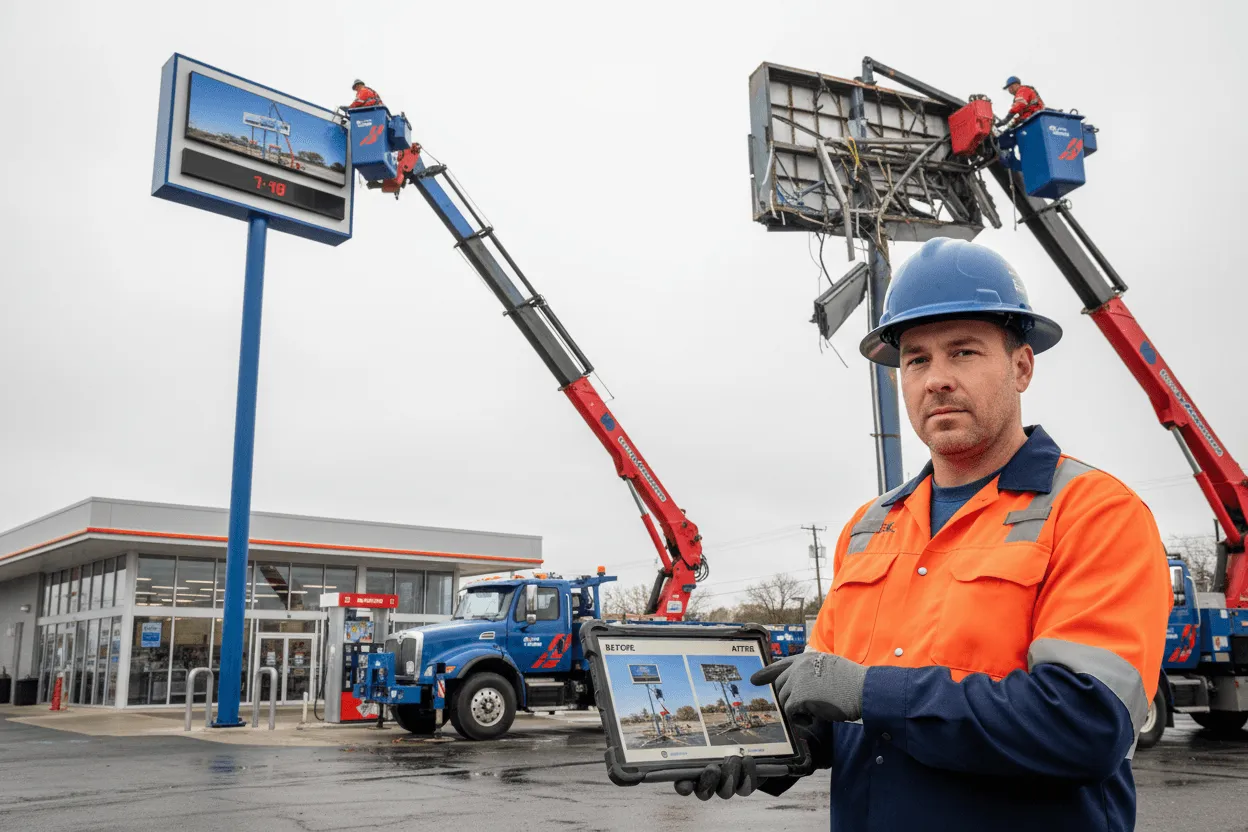
What determines whether your damaged sign can be repaired or needs full replacement? The first 72 hours after storm damage determine whether a commercial sign requires full replacement or structural repair, with national sign companies prioritizing high-visibility locations along interstate corridors first.
Structural settling reveals itself within three days. What looks like minor pole damage Monday morning might show stress fractures by Wednesday afternoon. Weather exposure compounds this—wind-driven rain infiltrates compromised electrical enclosures, and temperature swings expand metal fatigue.
Temporary sign safety measures are emergency stabilization protocols that secure damaged commercial signage while permanent repair specifications are developed and approved. For Indianapolis projects visible from I-465 or I-70, INDOT requires notification within 48 hours if temporary barriers extend into right-of-way clearance zones.
Our emergency sign service Indianapolis team secures loose panels, disconnects electrical feeds at the breaker, installs safety barriers around compromised structures, and coordinates temporary banners when client locations need visible presence during repair timelines. Your project managers shouldn’t wait for full replacement bids when a $1,200 cabinet repair solves the immediate challenge.
Multi-Location Prioritization After Regional Storm Events
Interstate visibility comes first. Period. A damaged pylon sign along I-65 in Greenwood affects brand presence for 50,000+ daily commuters. Parking lot directionals can wait 72 hours while your team coordinates structural assessments for high-traffic locations.
| Decision Factor | Temporary Solution | Permanent Repair |
|---|---|---|
| Timeline | 24-48 hour deployment | 7-21 days with permits |
| Cost Range | $800-$2,400 | $3,500-$18,000 |
| Permit Required | Only if structural | Always for commercial signs |
| Documentation | Photo-tagged GPS records | Full engineering assessment |
Pre-Storm Documentation: Why Annual Maintenance Photos Determine Claim Approval Speed
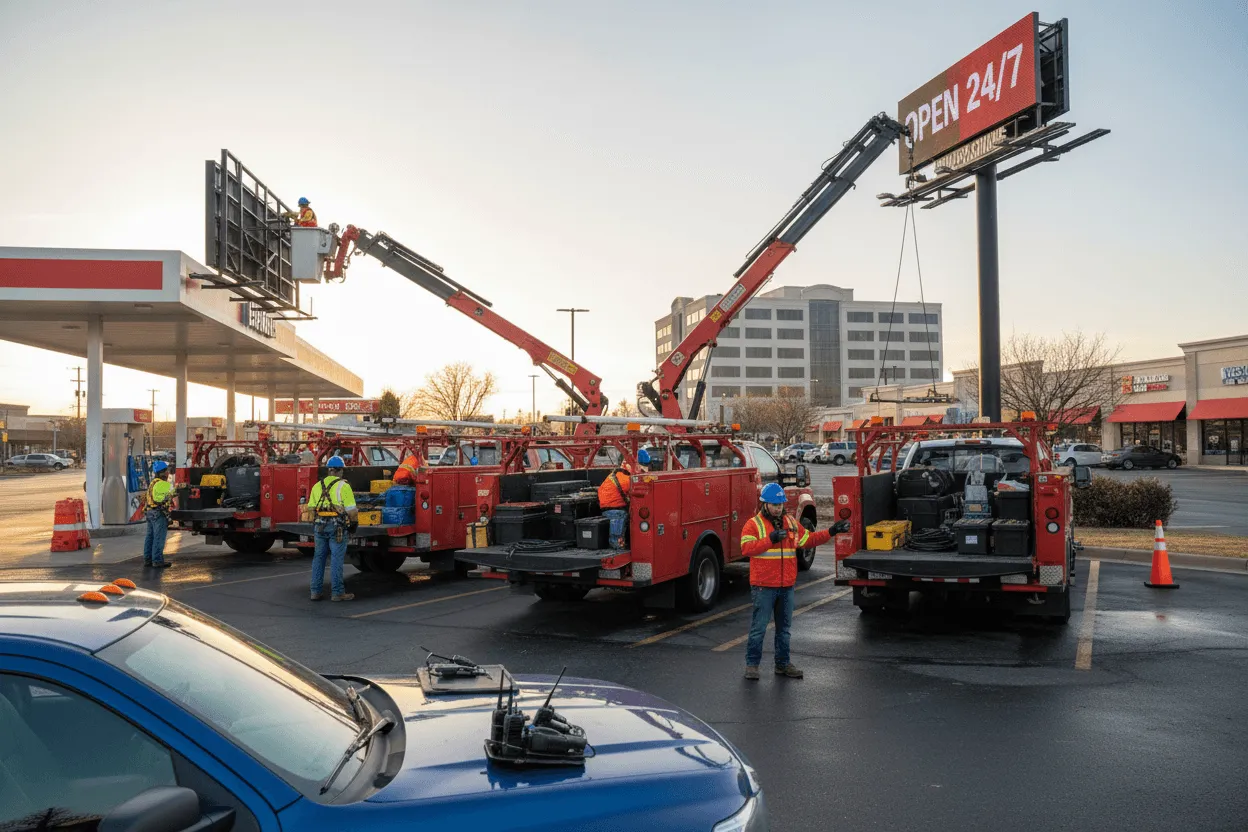
Insurance carriers in Indiana require documented pre-storm conditions for commercial signs installed after 2020, making annual maintenance photos critical for claim approval. Pre-loss documentation is photographic evidence of your sign’s structural integrity, electrical connections, and overall condition before weather events occur that determines how quickly your claim gets processed—typically the difference between a 15-day claim approval and a 90-day dispute process with commercial carriers.
What Pre-Storm Photos Should Document
Based on our experience coordinating insurance claims across Indianapolis and surrounding Marion County locations, adjusters specifically request:
- Structural mounting points and pole integrity with close-up views
- Electrical connections, conduit entry points, and weatherproofing seals
- Cabinet condition including any pre-existing dents or panel gaps
- Full lighting function with all lamps operational
- GPS-tagged metadata showing exact location and date
A distribution center in Plainfield that we service annually had documentation that accelerated their $18K claim approval after June storm damage. The insurance carrier processed payment in 16 days instead of the typical 60-90 day timeline for undocumented claims.
How Documentation Service Works as Part of Maintenance Contracts
Our preventive sign service includes paperless electronic documentation with cloud storage that meets 2026 insurance standards requiring GPS-tagged field photos. Every sign repair and maintenance services visit automatically generates this documentation—no separate coordination needed. Include pre-storm documentation with your annual maintenance contract. Our GPS-tagged photo system ensures faster claim approval when you need it.
Coordinating Multi-Location Storm Response Across Indiana, Illinois, Ohio, and Kentucky
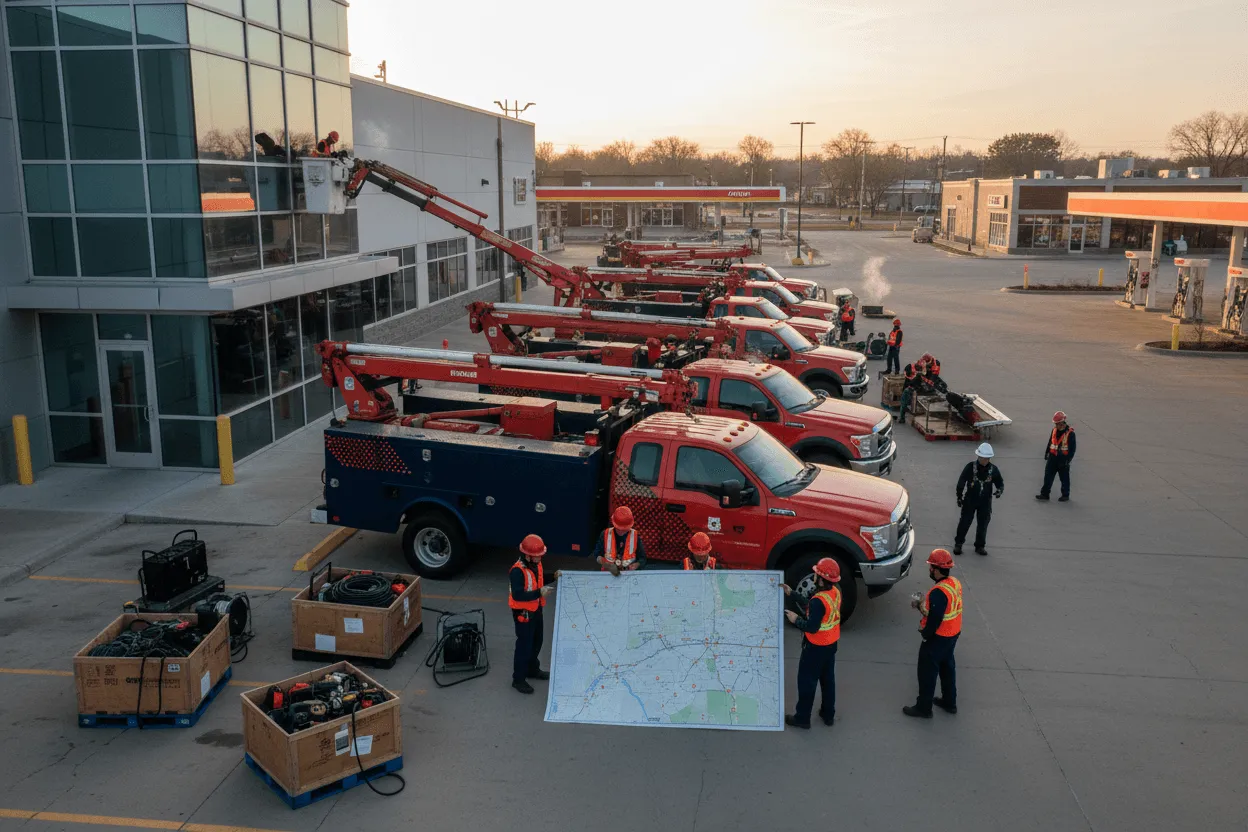
When a storm system tracks across I-70 hitting 40 locations in three states, who coordinates the response? Your national accounts team can’t chase permits in Fort Wayne while managing repairs in Dayton. Multi-location storm damage coordination across Indiana, Illinois, Ohio, and Kentucky requires centralized documentation systems that track response priority, temporary safety measures, and permit status for each location simultaneously.
Based on our experience serving national sign companies, storm events affecting the I-465 corridor retail locations generate 3-5x normal emergency service volume within 48 hours. We coordinate everything from Indianapolis—dispatching crews, tracking permit timelines, and documenting conditions at each site with GPS-tagged photos. Our paperless electronic system means your project manager sees real-time updates whether the damaged sign is in Carmel or Columbus.
How Regional Coverage Works for National Sign Company Partners
Regional rollout coordination starts with a prioritization matrix. Safety hazards come first—exposed electrical, structural instability. Then brand visibility issues at high-traffic locations. Customer access problems at entrances. Aesthetic damage gets scheduled last unless it creates liability exposure.
During the 2025 ice storm that hit the Hamilton County to Dayton corridor, we coordinated repairs across 23 locations in 11 days. Different jurisdictions meant different timelines—sign permits Indianapolis processed faster than some Ohio municipalities during emergency situations.
| Response Phase | Timeline | Documentation Deliverable |
|---|---|---|
| Initial assessment | 24-48 hours | Site photos, damage summary |
| Temporary safety measures | 48-72 hours | As-built documentation |
| Permit submission | Week 1 | Multi-jurisdiction tracking |
| Permanent repairs | 2-4 weeks | Final inspection certificates |
Partner With Midwest Signs for Emergency Sign Service in Indianapolis
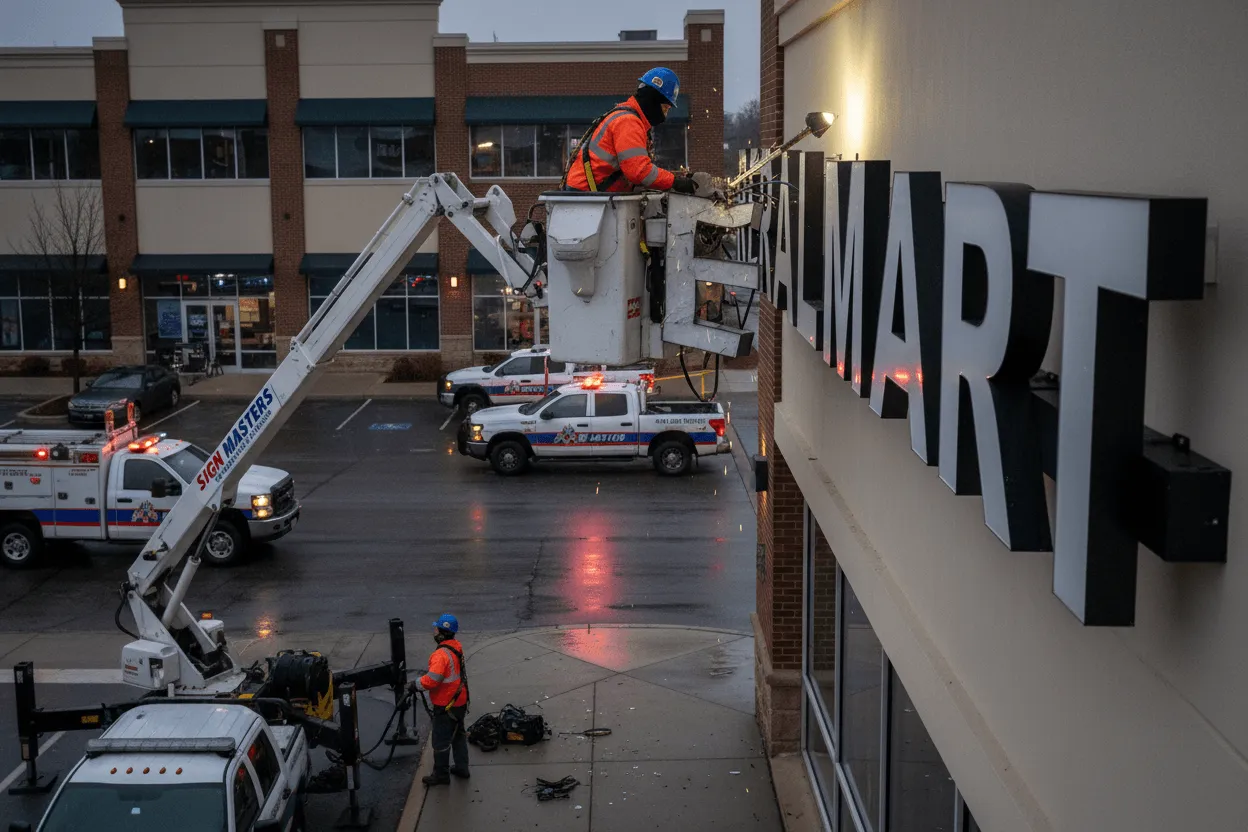
When storm damage hits your client locations across Indiana, you need a commercial sign service Indianapolis partner who responds within 24-48 hours with proper documentation systems already in place. We’ve covered this territory for over 40 years because national sign companies and facilities managers need responsive partners who understand the insurance coordination timeline—not vendors who show up when it’s convenient.
Our paperless documentation system with GPS-tagged field photos means your adjusters get what they need in the format they expect. Based on our experience coordinating multi-location storm response across the Indianapolis metropolitan area, this documentation approach reduces claim processing delays by days compared to handwritten reports.
We’re BBB Accredited and maintain a fleet covering all of Indiana plus Illinois, Ohio, and Kentucky. Our service crews handle everything from initial safety assessments to permanent repairs, and we partner directly with your project managers—not compete with them for the end client relationship. As an Indianapolis-based sign installation Indianapolis service partner since 1988, we understand the difference between emergency response and routine maintenance timelines.
Add Midwest Signs as your Indianapolis-area emergency service partner. Call (317) 800-6500 or visit our facility at 8560 E. 30th St., Suite A, Indianapolis to discuss 24-48 hour response coverage for your locations.
Reviewed by Ron Courtney, President, 40+ years commercial sign industry experience
Frequently Asked Questions About Emergency Sign Service in Indianapolis
How quickly can emergency sign service respond to storm damage in Indianapolis?
Emergency sign service in Indianapolis operates on a 24-48 hour response timeline. The first 24 hours focus on safety assessment and damage documentation required for insurance claims, with temporary safety measures implemented immediately. Permanent repairs are scheduled after structural evaluation is complete and insurance documentation is filed. Our crews prioritize multi-location portfolios when national sign companies have multiple damaged sites across the metro area.
What documentation do I need for a commercial sign insurance claim after storm damage?
Insurance claims require GPS-tagged photos of damage from multiple angles, National Weather Service wind speed data, structural integrity assessments, pre-loss condition photos if available, electrical system evaluation, and time-stamped service reports. According to our experience coordinating with commercial adjusters in Indiana, claims exceeding $5,000 in 2026 require minimum 12-photo documentation sets. Most adjusters also want mounting system photos showing how failure occurred.
Does emergency sign service in Indianapolis cover surrounding areas and other states?
Midwest Signs provides emergency sign service throughout Indianapolis and all of Indiana, with regional coverage extending to Illinois, Ohio, and Kentucky. The Indianapolis-based coordination center manages multi-location storm response with consistent documentation standards and 24-48 hour response commitment across the four-state service area. Regional storm coordination prevents national sign partners from juggling multiple vendors when weather systems track across state lines.
Should storm-damaged signs be repaired or replaced?
The first 72 hours after storm damage determine repair vs. replacement decisions. Structural assessments evaluate mounting integrity, cabinet damage, electrical safety, and weatherproofing. Many signs that appear severely damaged can be repaired cost-effectively, while some minor-looking damage indicates underlying structural issues requiring replacement. Professional assessment prevents both over-spending and safety liability that facilities managers face.
What are temporary sign safety measures after storm damage?
Temporary safety measures include securing loose components with additional fasteners, disconnecting electrical systems to prevent fire hazards, installing safety barriers around damaged ground signs, and removing debris. For high-visibility locations, temporary banner signage may be installed while permits for permanent repairs are processed. All temporary measures must meet local code requirements to avoid violations.
How does pre-storm documentation affect insurance claim approval?
Pre-storm maintenance photos and documentation accelerate insurance claim approval from 90 days to 15 days on average, based on our experience serving national sign partners. Insurance carriers in Indiana require documented pre-loss conditions for commercial signs installed after 2020. Annual documentation should include structural mounting photos, electrical connections, cabinet integrity, lighting function, and weatherproofing seals, all GPS-tagged and cloud-stored for adjuster access.