


Direct Answer
Summer sign maintenance protects commercial signage from Indiana’s extreme UV exposure, thermal stress on LED components, and severe storm damage between May and September. A comprehensive maintenance protocol includes preventive cleaning, electrical system inspections, and structural assessments tailored to the Midwest climate. We partner with national sign companies and facilities managers to schedule pre-season inspections that prevent emergency failures during peak retail season.
“Summer sign maintenance addresses UV exposure, thermal stress on LED components, storm preparation, and preventive cleaning during Indiana’s most demanding season for commercial signage.” Our service crews handle everything from sign installation Indianapolis partners trust to ongoing seasonal maintenance across the region.
Why Indiana Summers Are the Most Critical Season for Commercial Sign Maintenance
Indiana experiences 40-50 severe thunderstorm days annually, with peak frequency June through August, making summer the highest-risk season for sign damage. Combine that with UV index readings consistently above 8 during midday hours, and you’ve got conditions that accelerate deterioration faster than any other season.
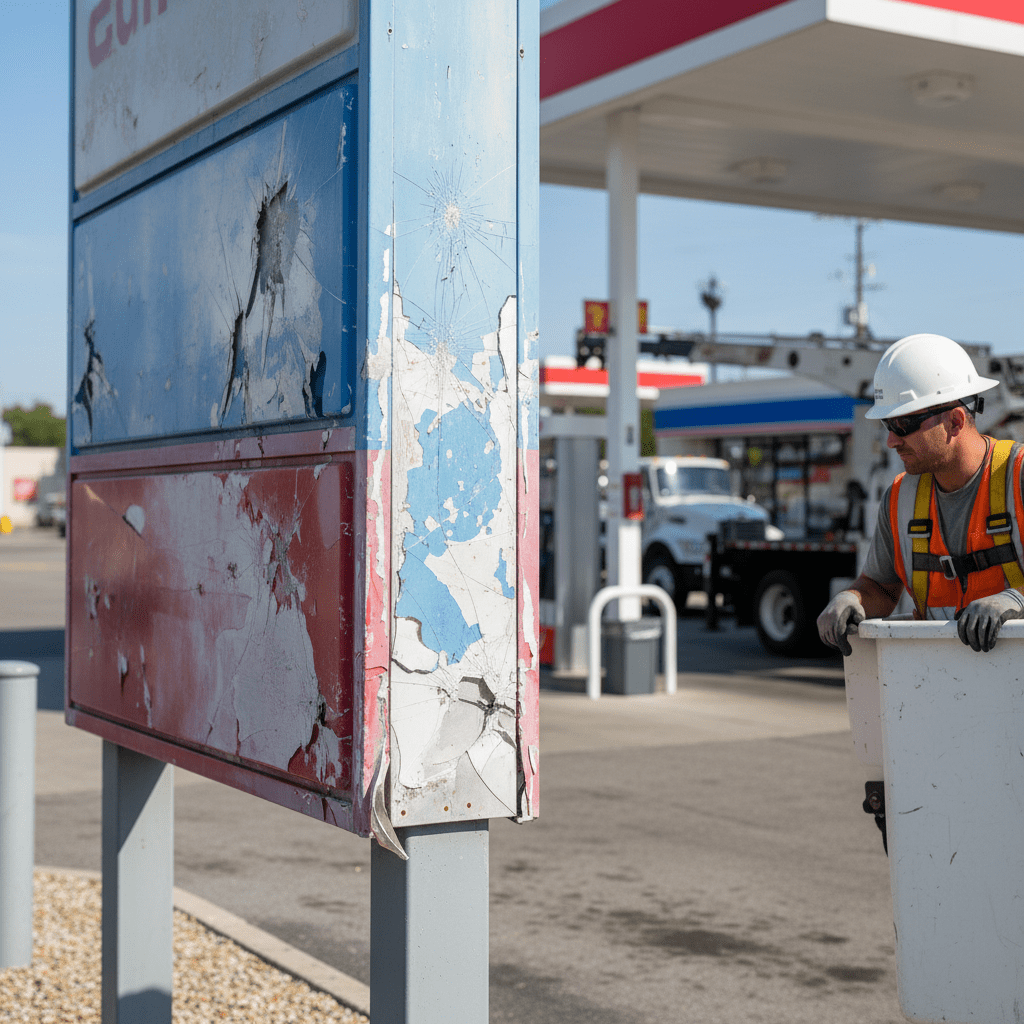
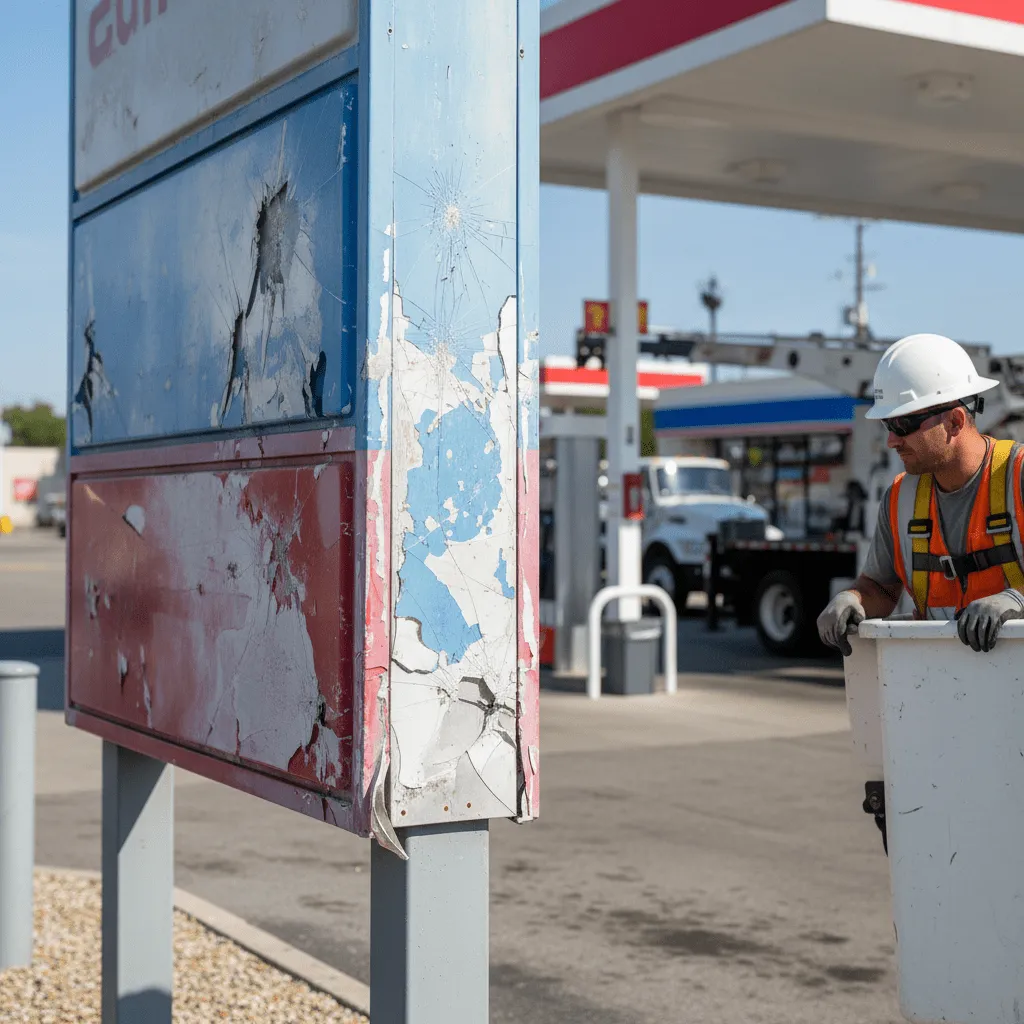
UV degradation in polycarbonate faces is the photochemical breakdown of plastic face materials caused by prolonged ultraviolet exposure that leads to yellowing, cracking, and reduced light transmission. Based on our experience serving Indiana commercial signage partners since 1988, we track failure patterns across hundreds of channel letter installations. Summer months account for approximately 60% of the UV-related service calls we receive annually.
Heat and UV Exposure Impact on Sign Materials
Summer sign maintenance in Indiana requires addressing three critical factors: UV degradation that accelerates 40% faster during June through August, thermal expansion in LED components that can cause premature failure, and storm damage from the region’s severe weather season. LED heat stress becomes particularly problematic when ambient temperatures exceed 90°F for consecutive days—a common pattern in Indianapolis and throughout the region.
Polycarbonate deterioration shows up first as hairline cracks around mounting points. Then you’ll see color shift in the faces themselves. Your clients start calling because their signage looks dingy even though the LEDs still work.
Storm Season and Structural Stress
June through August brings straight-line winds exceeding 60 mph, hail, and sudden temperature drops that stress mounting hardware. Cabinet signs with compromised seals allow moisture intrusion during these events. That’s when you get the emergency calls about flickering message centers or completely dark channel letters. Preventive commercial lighting maintenance before storm season prevents most of these situations.
The Pre-Season Sign Maintenance Checklist: What Your Checklist Must Include
A pre-season inspection protocol is a comprehensive signage assessment conducted before summer peak season that identifies and resolves potential failure points before they disrupt your client’s operations. May is the optimal timing — you’re ahead of the brutal UV exposure and storm season, but late enough that winter damage is fully visible. National sign companies report that 60% of emergency service calls during summer months could have been prevented with a documented pre-season inspection protocol.
Structural and Mounting Inspection
Start with what holds the sign in place. We climb up and check every structural element your team can’t assess from the ground.
- Verify anchor bolts and mounting brackets for rust, looseness, or stress cracks
- Inspect pole foundations and monument sign bases for settling or concrete deterioration
- Check channel letter mounting studs and transformer boxes for secure attachment
- Document wind load capacity compliance for high-profile locations
- Photograph any structural concerns with measurement documentation
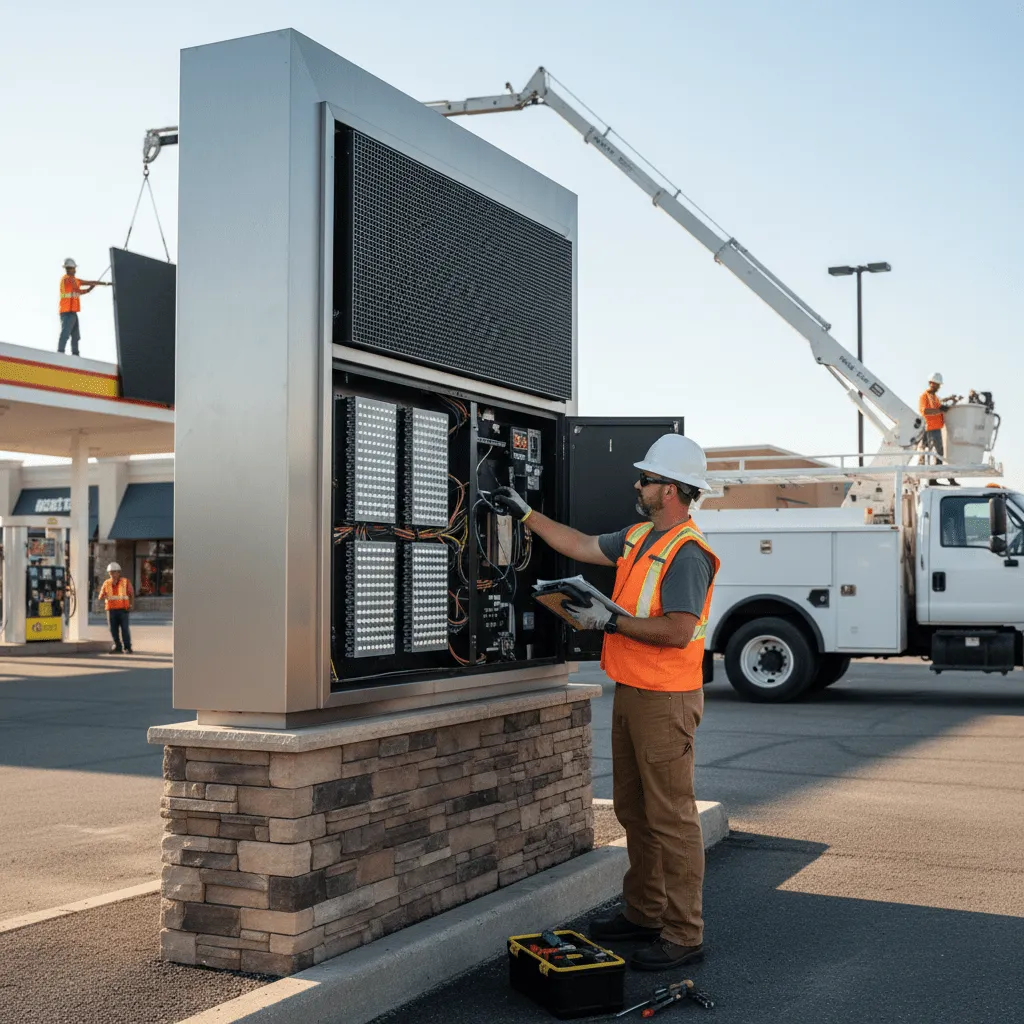
For LED message centers, cabinet integrity matters as much as the display. We’ve caught failing gaskets on Keystone at the Crossing installations that would’ve meant water intrusion by July.
Electrical and Lighting Components
Electrical failures spike when ambient temperatures hit the 90s. Your sign inspection checklist should cover power supplies, ballasts, LED modules, and all connection points. Check for discolored wires, burnt contactors, and transformer heat signatures. For monument signs with internal lighting, ventilation assessment prevents premature ballast failure.
Face and Graphics Assessment
UV degradation accelerates fast during Indiana summers. Inspect vinyl graphics for edge lifting, color fade, and brittleness. Check polycarbonate faces for yellowing, cracking, or impact damage. Acrylic faces need scratch and haze evaluation. A comprehensive inspection conducted in May identifies an average of 3-4 maintenance issues per location before they escalate to failures during peak season.
Our paperless documentation system photographs every finding, tags it to your location database, and delivers reports within 24-48 hours — essential when you’re coordinating regional rollouts across multiple properties.
Need a pre-season inspection scheduled for your Indiana locations before summer? Midwest Signs provides comprehensive commercial sign assessments with 24-48 hour turnaround and detailed documentation through our seasonal sign cleaning and maintenance services for multi-location partners.
LED Sign Maintenance and EMC Care During High-Temperature Months
LED message centers and EMC displays generate significantly more heat during summer operation, and without proper ventilation inspection, internal temperatures can exceed manufacturer specifications by 30-50 degrees. That’s not just a performance issue—it’s a fast track to component failure. Based on our experience serving national sign partners across Indiana, LED component failure rates increase 35% when ambient temperatures exceed 95°F for extended periods, common during Indiana summers.
Understanding Heat Impact on LED Components
Thermal expansion in LED drivers is the gradual warping and degradation of electronic driver components that occurs when repeated heat cycles break down solder joints and capacitor seals. Static LED channel letters typically handle heat better because they’re simpler—fewer electronics, better airflow. But EMC displays and programmable LED message center and EMC services pack power supplies, controllers, and hundreds of pixels into enclosed cabinets.
Here’s what we see in facilities along the Interstate 65 corridor: EMC displays run hot anyway, but summer loads push them over the edge. Power supplies fail first, then drivers, then you’re looking at catastrophic display failure instead of preventive sign maintenance.
EMC Display Summer Maintenance Protocol
Digital display maintenance requirements change when temperatures climb. You need ventilation checks—fans running, filters clear, no debris blocking vents. Thermal monitoring catches problems before they cascade. Pixel testing under full load reveals weak components that’ll fail in July heat.
| Sign Type | Summer Maintenance Frequency | Off-Season Frequency | Critical Check |
|---|---|---|---|
| EMC/LED Message Centers | Monthly | Quarterly | Ventilation + thermal scan |
| LED Channel Letters | Bi-monthly | Semi-annually | Driver temperature check |
| Illuminated Cabinets | Bi-monthly | Quarterly | Ballast inspection |
| Monument Signs (LED) | Quarterly | Annually | Base ventilation |
Watchfire specifications call for operating temperatures below 104°F internal. Most EMC inspection protocols we run for multi-location clients include infrared scanning to verify cabinet temps stay within range during peak afternoon hours.
Channel Letter Cleaning and Seal Inspection: Summer-Specific Concerns
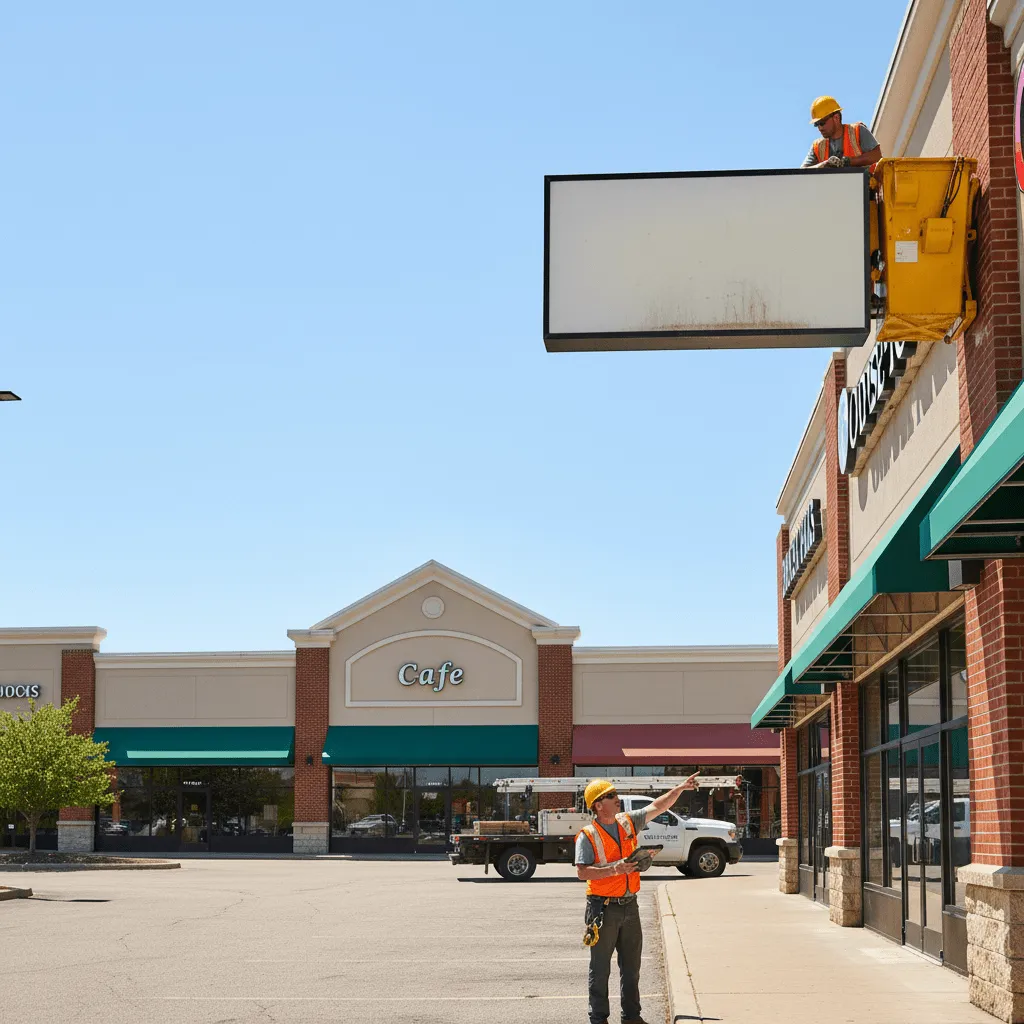
Ever notice how channel letter failures seem to cascade across a single sign during summer? One letter goes dark, then another two weeks later, then a third. That’s not coincidence—it’s seal failure progression triggered by heat expansion cycles.
Summer reveals what winter hides. Channel letter seals expand in 95-degree heat, allowing moisture infiltration that stays trapped inside. When transformers heat up during evening operation, that moisture accelerates component failure. Add pollen accumulation, bird droppings, and insect debris that blocks light output, and you’ve got the perfect storm for emergency service calls during Q3.
External Cleaning Best Practices
Sign face cleaning should address three summer-specific contaminants. Pollen coats acrylic faces and reduces light transmission by up to 30% based on our experience across Indiana installations. Bird droppings create etching if left longer than a week. Dead insects accumulate inside letter housings through compromised seals, casting shadows across LED strings.
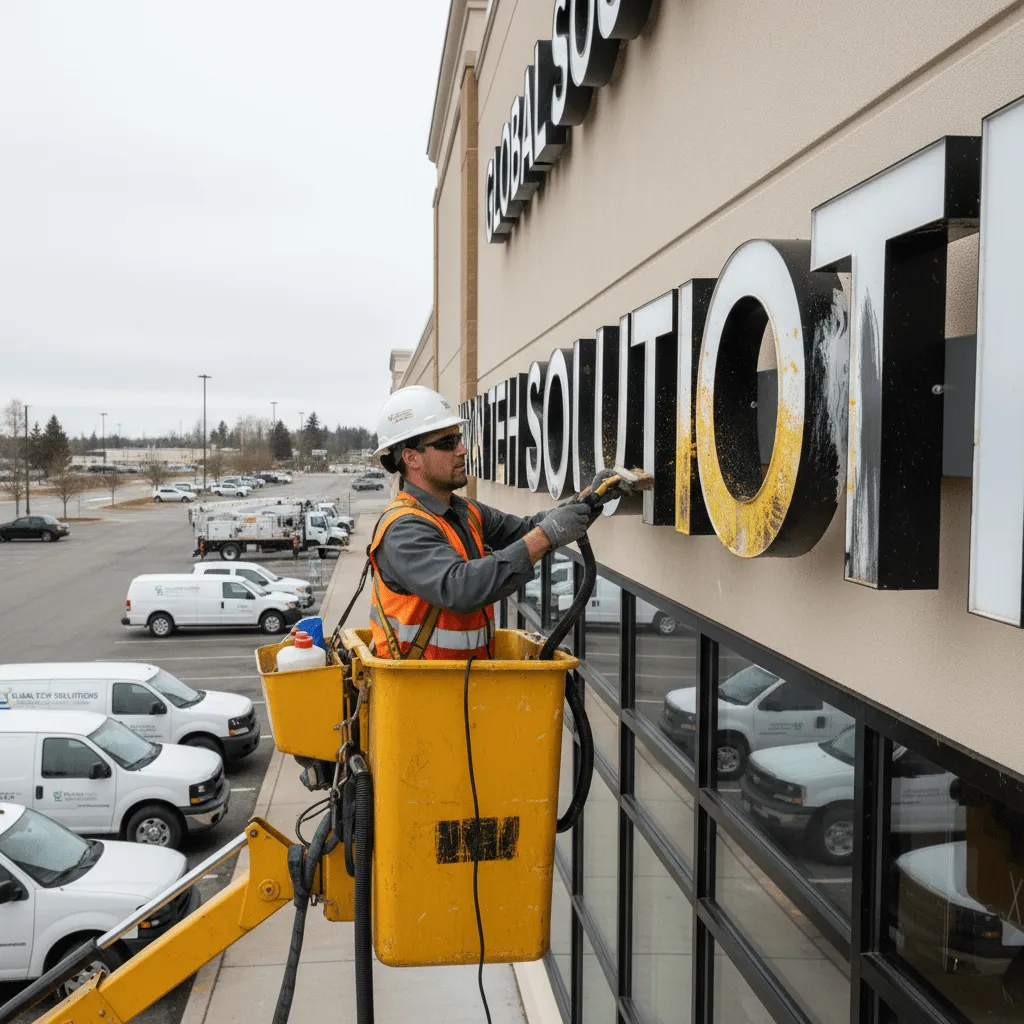
Professional commercial sign repair and service teams clean from bucket trucks using pH-neutral solutions that won’t degrade polycarbonate. Pressure washing damages channel letter seals—a mistake we still see contractors make on retail corridors like Castleton.
Internal Component and Seal Inspection
Channel letter maintenance during summer requires both external cleaning to remove pollen and insect debris and internal inspection for moisture infiltration that occurs when seals expand in heat. Our illuminated letter service protocol checks:
- Gasket integrity at mounting flanges and letter backs
- Transformer operation under load conditions
- LED string continuity and junction connections
- Moisture presence inside letter cavities
Preventive seal maintenance costs $45-75 per letter. Emergency letter replacement during peak season? $350-500 per letter plus crane rental and after-hours labor. Channel letters need both external cleaning and internal seal inspection to prevent the cascading failures that start with a single compromised letter.
Protect your commercial signage investment this summer. Contact Midwest Signs for channel letter service Indianapolis professionals trust, LED inspection, and preventive sign maintenance across Indiana and surrounding states. Schedule your seasonal cleaning assessment before heat-related failures impact your client locations.
Partnering with a Regional Service Provider for Summer Sign Maintenance in Indiana
Your procurement team needs a commercial sign service partner who can deliver responsive maintenance across multiple locations without creating a dozen different vendor relationships. For facilities managers tracking 20, 50, or 100+ locations throughout the Midwest, that coordination challenge becomes overwhelming fast.
Here’s what separates a reliable regional service provider from a local sign shop: field documentation, permit handling expertise, and actual coverage area. When you’re managing a retail chain’s signage from our Indianapolis headquarters at 8560 E. 30th St., we understand that “we’ll get to it next week” doesn’t work for a dark monument sign at a high-traffic location in Fort Wayne or a failed channel letter in Evansville. Our 24-48 hour response commitment covers Indiana plus adjacent areas in Illinois, Ohio, and Kentucky with dedicated fleet vehicles—not a contractor scrambling to find someone who might be available.
Documentation matters more than most local shops realize. National accounts coordinators need paperless field reports, before-and-after photos, and work order tracking that integrates with your existing systems. We’ve built comprehensive sign surveys and documentation protocols specifically for multi-location sign service coordination.
A comprehensive summer sign maintenance checklist completed in May prevents an average of 3-4 emergency service calls per location during the peak season, according to facilities management data from multi-location retail clients.
Partnering with a regional service provider who understands Indiana’s summer conditions ensures faster response times and preventive maintenance that protects your brand visibility. Our 40+ years navigating Indiana’s UV intensity and severe weather patterns means we know which components fail first and how to prevent those failures through our services.
Frequently Asked Questions About Summer Sign Maintenance
When should I schedule pre-season sign maintenance in Indianapolis?
Schedule pre-season sign maintenance during April or early May in Indianapolis, before peak heat and storm season begins. This timing allows identification and repair of issues before your busiest retail months (June-August) when emergency service calls spike and signage visibility is most critical. A May inspection provides adequate time to address findings before summer weather stress accelerates any existing problems. Based on our experience serving national sign company partners across Indiana, facilities that delay inspections past mid-May face longer lead times for parts and scheduling conflicts during peak season.
How often should commercial LED signs be maintained during summer months?
LED signs and EMC displays require quarterly inspection during normal conditions, but summer heat stress warrants a mid-season check in July for locations across Indiana. LED components are particularly sensitive to sustained temperatures above 95°F. A brief mid-summer inspection focuses on ventilation function, power supply heat levels, and pixel performance under thermal load to prevent failures during your peak season. Without this check, heat-stressed drivers often fail in August when replacement scheduling is most difficult.
What’s included in a comprehensive sign maintenance inspection?
A comprehensive inspection covers structural mounting and integrity, electrical components and connections, LED or lamp function, sign face condition and cleaning needs, seal integrity on channel letters, and documentation with photos. For multi-location partners, inspection reports include prioritized findings, repair recommendations, and cost estimates. The typical inspection takes 30-60 minutes per sign depending on size and complexity. Our technicians document everything through a paperless system that facilities managers can access for tracking maintenance across entire portfolios.
Can summer weather really damage commercial signage in Indiana?
Indiana’s summer conditions create the highest risk for sign damage: UV index 8-9 accelerates polycarbonate and vinyl degradation, temperatures exceeding 95°F stress LED drivers and transformers, 40-50 severe storm days threaten structural integrity, and humidity promotes seal failures in illuminated letters. Without preventive maintenance, summer accelerates wear that would normally occur over 2-3 years into a single season, particularly for south and west-facing signs.
How quickly can sign maintenance be scheduled for multiple Indiana locations?
Regional service partners with fleet coverage across Indiana typically schedule maintenance within 24-48 hours for routine inspections and cleaning. For multi-location rollouts, a phased schedule coordinates inspections across 10-20+ sites per week. Projects requiring sign permits Indianapolis regulations or access coordination may need 5-7 business days for scheduling. Emergency service response for sign failures averages 24 hours or less depending on location and issue severity.
Do channel letters need different maintenance than other commercial signs?
Yes, channel letters require both external cleaning and internal inspection because they’re individually sealed units vulnerable to moisture infiltration. Summer heat expands seals and reveals gaps where moisture enters. A single compromised letter often indicates seal deterioration across the entire sign. Channel letter maintenance includes cleaning faces, inspecting gaskets and seals, testing transformers or LED drivers, and checking for moisture or insect presence inside letters—protocols not needed for non-illuminated or cabinet signs.